Nutsedge is one of the toughest creeping lawn weeds that fools people most, because yellow and purple types look alike from the driveway but behave very differently underground. Most nutsedge treatments fail before the sprayer comes out. The problem is the ID, not the product. A spray that clears one can barely dent the other. If you have hit the same patch twice and watched it return within a month, there is a decent chance you treated purple like it was yellow.
Purple vs Yellow Nutsedge: Foliage, Height, Growth Habit and Roots
Both are perennial sedges, and both have a triangular stem with leaves in sets of three, which is why they get lumped together as "nutgrass." Compare them on these four points, and you get the answer to settle the doubt.
Foliage Color
- Yellow nutsedge has light, yellow-green leaves with a smooth, waxy shine.
- Purple nutsedge is a darker green.
In a lawn, a yellow patch looks pale and almost lime next to the turf around it, and Purdue notes it stands out most in hot, dry summers because it grows faster than the grass.
Leaf Shape
- Leaf shape backs up the color.
- UF/IFAS describes long, tapering tips on yellow and an abrupt taper on purple, which Texas A&M calls a blunt tip.
- UC IPM lists yellow leaves at 4 to 9 mm wide and purple at 3 to 6 mm, so yellow is also the broader blade.
Height
- Yellow is usually the taller plant. UC IPM puts yellow stems at about 3 feet.
- The purple stem is at roughly 1 1/3 feet.
- Clemson gives 12 to 16 inches for mature yellow and under 6 inches for purple. UF/IFAS, though, lists up to 36 inches for both.
Sources disagree here, so treat height as a hint, never as proof. Mowing hides it completely, so use it on unmown edges, fence lines, and beds.
Growth Habit
- Both grow upright, but they do not behave the same across a season.
- Clemson says yellow emerges earlier and purple later, with the catch that the University of Arizona reports purple pushing up from tubers as early as February or March once desert soil warms. Where you live changes the calendar.
- Purple is the one that builds a crowd. Texas A&M describes a more extensive network of tubers and rhizomes than yellow, and UC IPM notes it often forms dense colonies.
- UF/IFAS adds that purple typically does not produce seed in the US, so its spread is almost entirely underground. That matters, because a mower and a seed rake will not slow it down.
Roots and Tubers
This is the comparison I would rely on most, since the roots do not change with mowing or weather.
- Yellow nutsedge forms a single tuber at the tip of each rhizome. Texas A&M says those tubers are smooth and hairless.
- Purple forms tubers in chains along the rhizome, and Texas A&M says they are darker and more likely to have hairs across the surface.
I would not lean on tuber color. Texas A&M calls purple tubers dark and charcoal-colored, but UF/IFAS describes yellow tubers as brown to black too, so color alone can mislead. Look for the chain.
Depth is another place sources split. UF/IFAS says most bulbs sit within 3 inches of the surface, with purple bulbs found 4 to 8 inches down. Clemson says tubers and rhizomes of both can reach 8 to 14 inches. The practical lesson is to dig deeper than feels necessary. Pull up a clump with a trowel, rinse the roots under a hose, and count what you see.
| Parameter | Yellow Nutsedge | Purple Nutsedge |
| Foliage color | Light, yellow-green, waxy | Darker green |
| Leaf tip | Long, tapered | Blunt, abrupt |
| Leaf width | 4 to 9 mm (UC IPM) | 3 to 6 mm (UC IPM) |
| Height | Taller, about 12 to 36 in | Shorter, under 6 in to about 16 in |
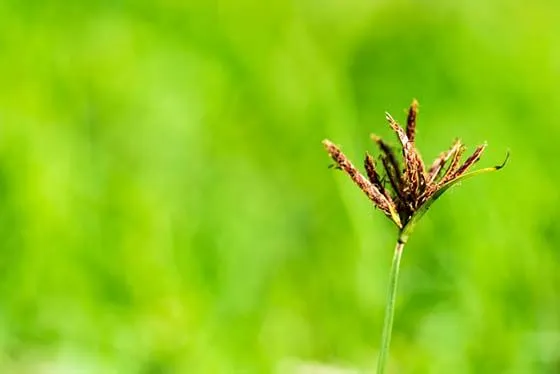
| Seedhead | Straw-yellow to tan | Reddish-purple |
| Growth habit | Upright, emerges earlier | Upright, dense colonies, spreads underground |
| Tubers | Single, at rhizome tips, smooth | In chains, often hairy, darker |
| Cold tolerance | Higher | Lower |
Location is a useful tiebreaker. Clemson's Home and Garden Information Center says yellow nutsedge is more widespread across the US because its tubers handle cold better. In the northern half of the country, yellow is the safer guess. In the Southeast and Southwest, purple gets more likely, and mixed patches are common.
Why Purple Is Tough to Control?
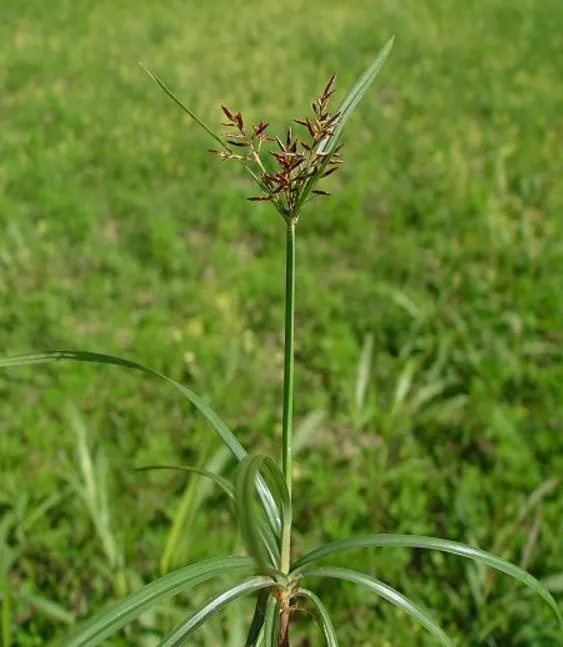
NC State weed scientists describe purple nutsedge as much harder to control than yellow. The biology backs that up. Purple starts making tubers within a few weeks of emerging and keeps adding them until frost. Yellow is no pushover either, since one plant can make up to 6,000 tubers under ideal conditions. Purdue adds that tubers can sit dormant for more than three years, which is why a patch that looks dead in August can come back next June.
What Works on Yellow Nutsedge?
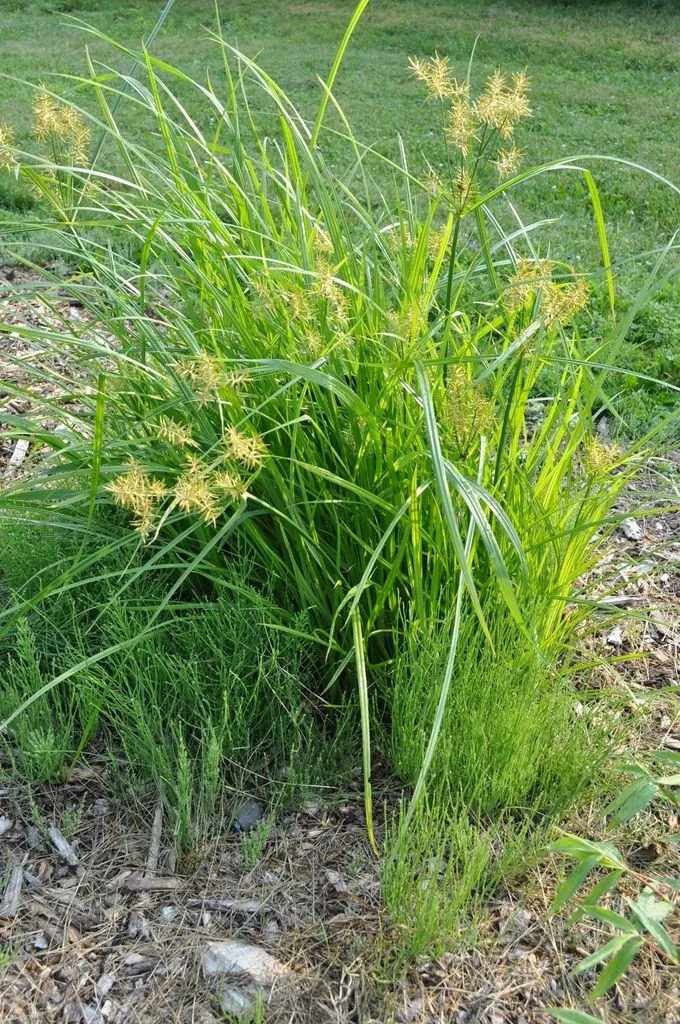
Timing does most of the work here. Purdue's turf specialists say late spring to early summer, while plants are young and before tubers form, is the best window. Nebraska Extension tells homeowners to act before June 21.
Halosulfuron, the active ingredient in SedgeHammer and several store brands, is the standard pick. Bentazon rates well on yellow in Clemson's ratings, so it is a fair backup. Check the label against your grass type before you buy. Our guide to weed killers that won't harm your grass is a good place to start if you are unsure what your lawn tolerates.
Nebraska's research also lists sulfentrazone and mesotrione as products that give some control of tubers that are germinating, which is the closest thing to prevention on yellow. Regular broadleaf or grass herbicides do nothing, because nutsedge is neither.
What Works on Purple Nutsedge?
Halosulfuron is the one active ingredient that rates well on both species, so it is what I would buy for purple. Bentazon is where people get burned. Clemson rates it well on yellow and poor on purple, so a sprayer full of it on a purple patch is wasted effort.
Application matters as much as the product. NC State found that two applications at 0.67 oz of SedgeHammer gave more consistent control than a single 1.3 oz pass. It also recommends adding 0.5 percent non-ionic surfactant unless your formulation already has one. University of Arizona guidance places the follow-up spray 4 to 6 weeks after the first spray. Labels cap use at two applications a year, so do not improvise a third.
Expect a slow win. Texas A&M cautions that halosulfuron results are not immediate, so do not re-spray just because the weeds still look green after a few days. Purdue's estimate for yellow nutsedge is two to three years of herbicide control to cut viable tubers in the soil by 90 percent. Purple is likely no faster.
Location Decides When to Spray
The calendar shifts with your climate, and this is where northern advice fails southern lawns. University of Arizona Extension reports purple nutsedge can start emerging from tubers as early as February or March once soil warms. Purdue and Nebraska point to late spring for yellow in cooler states. If you live in the Sun Belt, waiting for June means you are already behind. Watch for the first shiny green blades pushing through the turf, then book your first pass within a couple of weeks of that.
What Did Not Work?
Hand pulling. It feels productive, and it works on a few young plants when you lift the whole tuber chain. On an established purple patch, you leave tubers behind. Texas A&M warns that disturbing the rhizomes can stimulate dormant tubers to sprout, so tilling is a bad idea too.
Treating the symptom and ignoring water. Texas A&M points out that sedges often signal chronically wet soil. If the patch sits in a low spot or gets extra irrigation from a misaligned sprinkler, the weed keeps winning.
Spraying late. Once seedheads show, new tubers are already forming underground, and the herbicide has far less to work with.
Spraying near the garden. NC State warns that halosulfuron can injure some ornamentals, including arborvitae and yew, and should stay away from herbaceous perennials and annual flowers. It also acts slowly, which tests patience more than anything else.
What to Do After the Patch Dies?
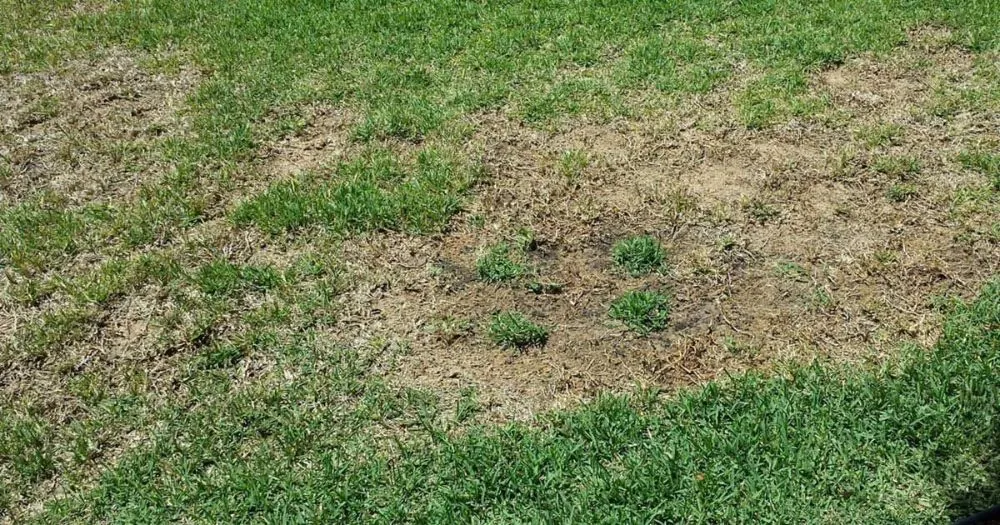
Bare spots left behind need fixing quickly or something worse moves in. Follow the same sod installation prep steps for the soil underneath, then reseed or lay turf. Do not reseed within the interval your herbicide label states, or the new grass can be injured too.