
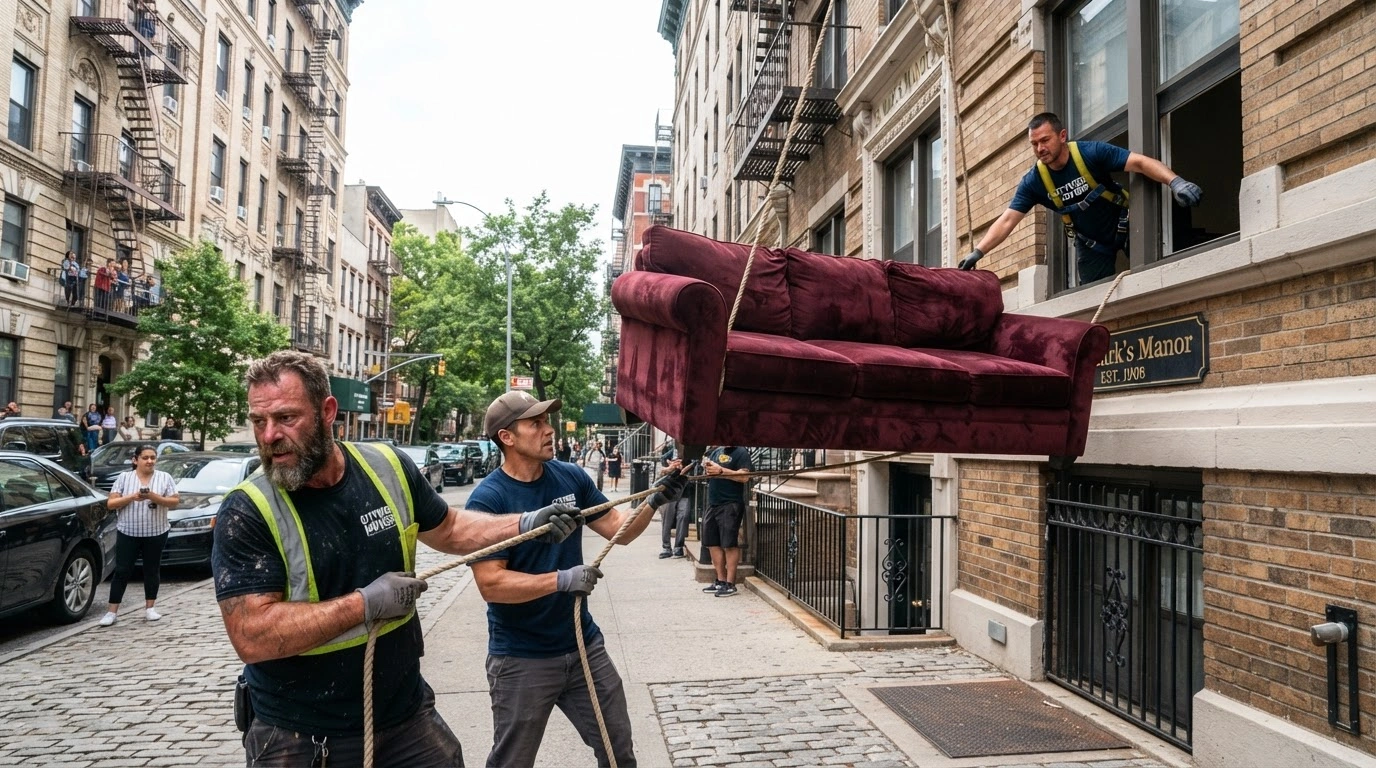
You found the perfect apartment. The light is great, the rent is fair, and the neighborhood feels like home. Then moving day arrives, and your beloved sectional gets wedged at the second landing with nowhere to go. If you have ever lived in an older building with narrow staircases, tight turns, and low ceilings, you know this scene all too well.
The good news is that a stuck couch does not have to mean a lost couch. Professional movers have a proven solution for furniture that simply will not fit through the front door: they bring it in through the window. It sounds dramatic, but window hoisting is a planned, controlled process that relies on the same rigging principles used on construction sites and in industrial settings every day.
When Hoisting Makes Sense
Before anyone removes a window, it pays to measure. Check the width of your stairwell, the tightest turn in the staircase, the height of the ceiling at each landing, and the width of every doorway along the path. Then compare those numbers to the dimensions of your largest pieces.
Items that most often end up going through a window include large sectionals, sleeper sofas, king size box springs, armoires, oversized dressers, pianos, and heavy glass or stone tables. If a piece cannot be disassembled and the numbers do not work, hoisting may be the safest option for both the furniture and the building. Forcing a sofa up a staircase can gouge walls, crack banisters, and leave you arguing with your landlord over your security deposit.
The Rigging Tools Behind a Window Hoist
A successful hoist depends on the right equipment, properly rated and carefully inspected. Here are the key tools a professional crew typically brings to the job.
Rope and pulley systems. Many hoists use high strength synthetic rope running through a pulley or snatch block. A snatch block is a pulley with a side plate that opens, allowing the rope to be inserted without threading the entire length. It lets the crew change the direction of pull, so the people doing the lifting can stand safely on the ground or inside the apartment instead of directly under the load.
Web slings and round slings- Rather than tying rope directly around your furniture, riggers wrap the load with synthetic web slings or round slings. These flat or tubular slings spread the pressure across a wider surface, which protects upholstery and wood finishes. They are lightweight, flexible, and easy to position around awkward shapes.
Shackle-. Shackles are steel connectors that join slings, rope, and hoisting hardware. A properly sized shackle with a secure pin keeps every connection in the system strong and reliable.
Chain hoists and lever hoists- For very heavy items such as pianos or safes, crews may use a manual chain hoist or lever hoist. These tools provide a mechanical advantage, allowing a small crew to raise a heavy load slowly and with precise control.
Beam clamps and anchor straps. Every hoist needs a solid anchor point. Depending on the building, that might be a roof beam, a structural support, or a temporary rigging frame. Beam clamps and anchor straps create a secure attachment point without damaging the structure.
Tag lines. A tag line is a simple rope tied to the load and held by a crew member on the ground. It keeps the furniture from spinning or swinging into the side of the building as it rises. This small detail makes a huge difference in keeping the load steady.
Spreader bars. For long items like sofas or headboards, a spreader bar can keep the slings at the proper angle and help keep the load level as it moves upward.
Protective wrapping. Moving blankets, corner guards, and stretch wrap protect the furniture from scrapes against brick, window frames, and railings.
Every piece of lifting equipment has a working load limit, the maximum weight it is rated to handle safely. Reputable crews verify these ratings against each item's weight and inspect slings, rope, and hardware for cuts, fraying, or wear before every lift.
How the Process Works
First, the crew removes the window sash and, when necessary, the frame to create the largest possible opening. Next, they set up the anchor point above the window, often on the roof or a floor above. The furniture is wrapped, secured in slings, and attached to the hoisting line with shackles. The crew then raises the load slowly while a team member guides it with a tag line. Once the piece reaches the window, movers inside carefully pull it through the opening. Finally, the window is reinstalled and checked to ensure it opens, closes, and seals properly.
Planning and Safety Tips
Always get written permission from your landlord or building management before scheduling a hoist. Some cities also require a permit to block the sidewalk or street below, so ask your mover whether they handle that paperwork. Confirm that the moving company carries liability insurance that covers both your belongings and the building. Weather matters too, since wind and rain can make a hoist unsafe, so be prepared to reschedule if conditions are poor.
On moving day, keep the area beneath the window clear of people, pets, and parked cars. Professional crews should wear gloves, hard hats, and sturdy footwear, and they should never allow anyone to stand under a suspended load.
Questions to Ask Your Mover
Ask how many window hoists they have completed, what equipment they use, how they select an anchor point, and whether their rigging gear is regularly inspected. A confident, experienced crew will be happy to explain their process.
A staircase that is too narrow does not have to stand in the way of your favorite furniture. With the right rigging tools, careful planning, and an experienced crew, your couch can make it into your new apartment the scenic way.