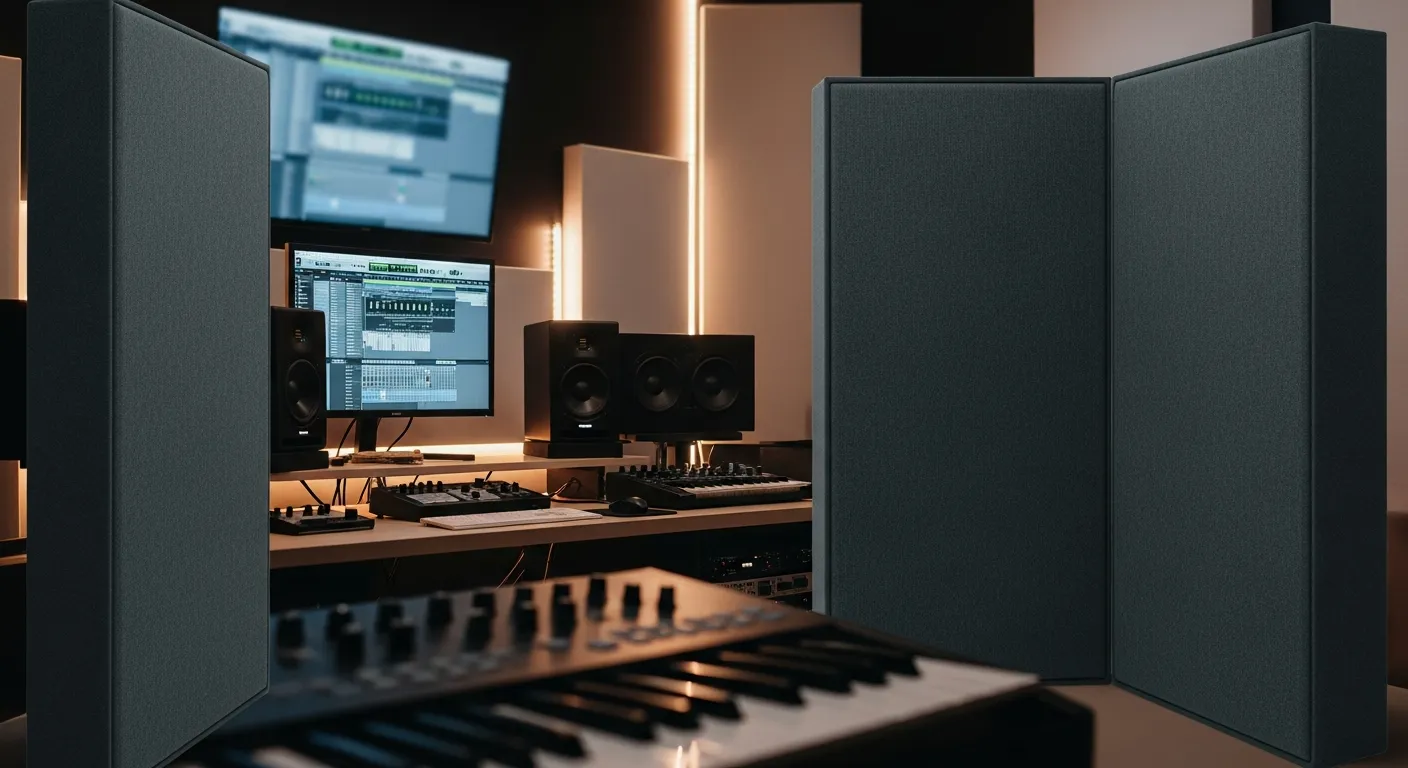
Building a home music studio often starts with gear, but the room itself plays an even bigger role than most people expect. You can have great monitors and still struggle if your space distorts what you hear. That’s where proper acoustic treatment comes in.
Bass traps, in particular, solve one of the most common issues—uncontrolled low frequencies. Once you address that, everything else starts to fall into place, and your mixes become far more reliable.
Why low-end control matters first
Low frequencies behave differently than anything else in your room, and that’s where most beginners get tripped up. Bass waves are long; they travel further, and they tend to pile up in certain areas. Because of this, your room ends up exaggerating some notes while completely hiding others, which throws your judgment off right away.
That kind of imbalance makes your mixes unreliable from the start. You might feel like your kick hits perfectly, only to realize later that it sounds weak elsewhere. The same goes for basslines that feel overwhelming in your room but disappear on headphones or in a car, which quickly becomes frustrating.
Once you tame those low frequencies, everything starts to make more sense. Your kick and bass sit where they should, and you don’t have to second-guess every adjustment. It becomes much easier to hear what’s actually happening instead of reacting to what your room exaggerates or hides.
A big part of that control comes from treating the spots where bass naturally build up. Corners are the main culprits, and that’s exactly where corner bass traps come into play. Placing them there helps absorb excess energy, stabilizing your entire listening environment and giving you a much clearer starting point.
How bass traps improve monitoring accuracy
When your room has too much low-end buildup, it creates an uneven frequency response that constantly misleads you. You think you’re hearing the truth, but the room shapes everything before it reaches your ears. That means every decision you make during mixing rests on a flawed foundation.
By introducing bass traps, you smooth out those inconsistencies. The room stops randomly boosting certain frequencies, and you get a much flatter response overall. This doesn’t mean the room becomes perfect, but it becomes predictable, which is far more valuable in practice.
As a result, your mixes translate better across different systems. What sounds balanced in your studio will sound balanced elsewhere, which is the goal you’re always chasing. You spend less time fixing issues later and more time focusing on creative choices instead of technical corrections.
Over time, this builds confidence in your workflow. You stop guessing and start trusting what you hear, which speeds everything up. Instead of constantly checking mixes on multiple devices, you can rely more on your main setup, knowing your room isn’t working against you anymore.
Where bass traps should go in a home studio
Placement plays a huge role in how effective bass traps actually are. You can have great materials, but if you put them in the wrong spots, you won’t get the results you expect. That’s why understanding where low frequencies gather becomes just as important as choosing the traps themselves.
Corners should always be your starting point. That’s where bass energy accumulates the most, especially in small rooms. Treating these areas first gives you the biggest improvement with the least effort, which is why most setups begin there.
You can take things further by addressing wall-ceiling junctions. These areas often get overlooked, yet they behave similarly to vertical corners in terms of bass buildup. Adding treatment here helps even things out even more and tightens up the overall response of your room.
Behind your monitors and along the rear wall, you’ll often find additional problem zones. Sound reflects back toward you, creating low-frequency interference that muddies your perception. Treating these spots helps clean up that reflection path and gives you a more focused listening position.
Different types of bass traps
Not all bass traps work the same way, and understanding the differences helps you make smarter choices. Some rely on thick, porous materials to absorb sound energy, while others use more specialized designs to target specific frequency ranges. Each type solves a slightly different problem.
Porous absorbers are the most common option you’ll come across. They’re usually made from dense foam or mineral wool, and they work by converting sound energy into heat. The thicker they are, the more effective they become at handling lower frequencies, which is why size matters here.
Membrane and panel traps take a different approach. Instead of absorbing broadly, they target specific frequencies more precisely. This makes them useful for dealing with stubborn problem areas that standard absorbers struggle to handle, especially in rooms with pronounced resonances.
Hybrid designs combine multiple techniques into a single unit. These traps aim to provide broader control while still addressing specific issues when needed. They’re often a bit more advanced, but they can offer a more balanced solution if you want to fine-tune your room beyond the basics.
Bass traps versus regular acoustic panels
It’s easy to confuse bass traps with regular acoustic panels, especially since they often look similar at first glance. However, they serve different purposes, and mixing them up can leave your room only partially treated. Each one targets a specific part of the frequency spectrum.
Regular panels focus on mid- and high-frequencies. They help reduce echo, flutter, and harsh reflections, which improves clarity. While that’s important, they don’t do much for the low end, and that’s where most of the real problems usually sit in smaller rooms.
Bass traps, on the other hand, are designed specifically for low frequencies. They’re thicker, denser, and placed in strategic locations to catch bass buildup. Without them, your room may still sound clean on the surface while hiding deeper issues that affect your mix balance.
Using both together creates a more complete treatment setup. Panels handle reflections that affect stereo imaging, while bass traps stabilize the low end. When combined properly, they turn your room into a much more reliable space for both mixing and recording.
Wrap up
At the end of the day, bass traps aren’t just an optional upgrade—they’re the foundation of a functional home studio. Without them, your room keeps working against you, no matter how good your gear is.
Once you take control of the low end, your mixes improve, your recordings sound cleaner, and your workflow becomes more efficient. It’s one of the simplest changes that makes the biggest difference.