

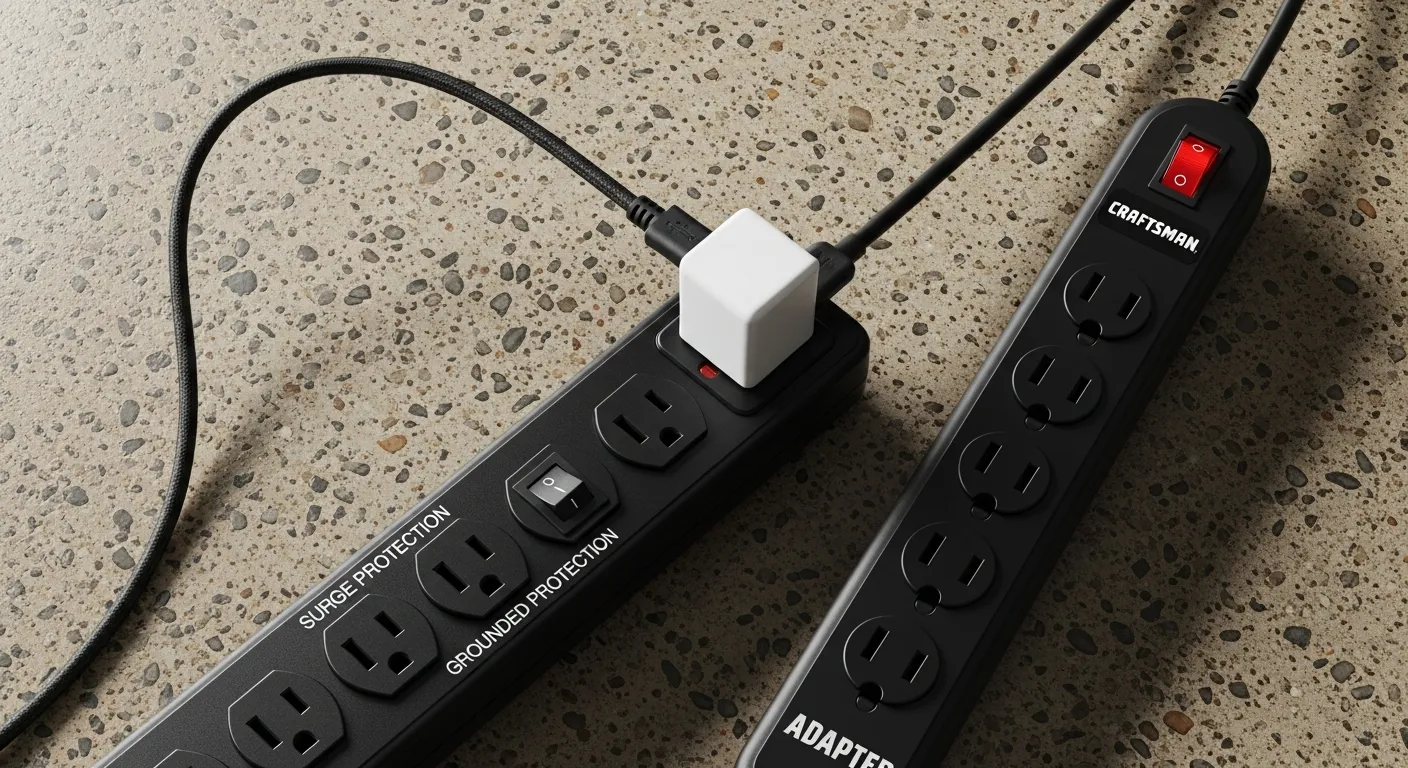
There is a good chance you have one sitting behind your TV right now. Maybe another one under your desk or plugged in next to your home office setup. The power strip with the little surge protector label on the side. You bought it at a hardware store, plugged everything in, and felt like you had done something responsible.
Here is the uncomfortable truth: for most Everett homeowners, that strip is doing a lot less than you think.
That is not meant to scare you. It is meant to save you from a situation that plenty of Riverside neighborhood and Silver Lake area homeowners have already been through, arriving home after a storm to find their television, computer, or HVAC control board quietly destroyed by a voltage spike that their strip never caught.
This post breaks down exactly what a retail strip protector can and cannot do, what actually puts your home at risk, and what whole-home surge protector installation in Everett looks like when it is done right.
What a Strip Surge Protector Actually Does?
A plug-in strip surge protector works through a small component called a metal oxide varistor, or MOV. When voltage rises above a certain threshold, the MOV absorbs the excess energy and diverts it to the ground wire. Simple concept, and it works reasonably well for small, localized spikes.
The problem is in the details.
MOVs wear out. Every time your strip absorbs a surge, the MOV degrades. There is no meter on the outside telling you how much capacity is left. That green "protected" light on your strip will stay on even after the MOV has been fully depleted by repeated small surges. You look at it, see green, and assume you are covered. You are not.
Joule ratings tell you the limit, not the protection level. You will see joule ratings on the box, anywhere from 400 to 2000 joules. Higher sounds better, but what that number actually describes is the total cumulative surge energy the device can absorb across its lifetime before it is burned out. One significant surge can eat through most of that rating in a single event.
Strip protectors have a response time lag. Most retail strips respond in nanoseconds, which sounds fast. But a sharp voltage spike, like the kind caused by a nearby grid switching event or a utility restoration after an outage in Lowell or North Everett, can hit its peak and begin damaging connected devices before the strip has fully clamped down.
They only protect what is plugged into them. This is the biggest limitation that almost no one thinks about. Your refrigerator, your HVAC system, your dishwasher, your water heater with a digital control board, your smart home hub wired directly into the wall. None of those are running through your strip. They are completely unprotected.
Why Everett Specifically Has a Surge Problem?
Everett's geography and grid infrastructure create above-average surge exposure for residential homeowners.
Snohomish County PUD serves a large area that includes dense urban neighborhoods like Bayside and Colby District alongside more rural stretches. When the grid experiences switching events, transformer issues, or restoration after an outage, that energy fluctuation travels through the utility lines and enters homes directly through the meter and panel.
The Pacific Northwest storm season compounds this. Wind events that knock out power and then restore it create return surges. Lightning activity in late summer generates high-amplitude voltage spikes. Homes near older distribution infrastructure, which includes many of the mid-century builds in the Rucker Hill and Everett waterfront areas, face grid irregularities that newer suburban grids experience less frequently.
And then there is the internal surge problem that most people overlook entirely. Studies from the electrical industry suggest that roughly 80 percent of power surges actually originate inside the home, not from outside. Every time your HVAC compressor kicks on, your refrigerator cycles, or your dryer starts, it creates a small voltage fluctuation that travels back through your home's wiring. Over months and years, those internal micro-surges do cumulative damage to electronics and appliances. A strip protector on your TV does nothing about the surge traveling through the circuit to your dishwasher three rooms away.
What Whole-Home Surge Protection Actually Does?
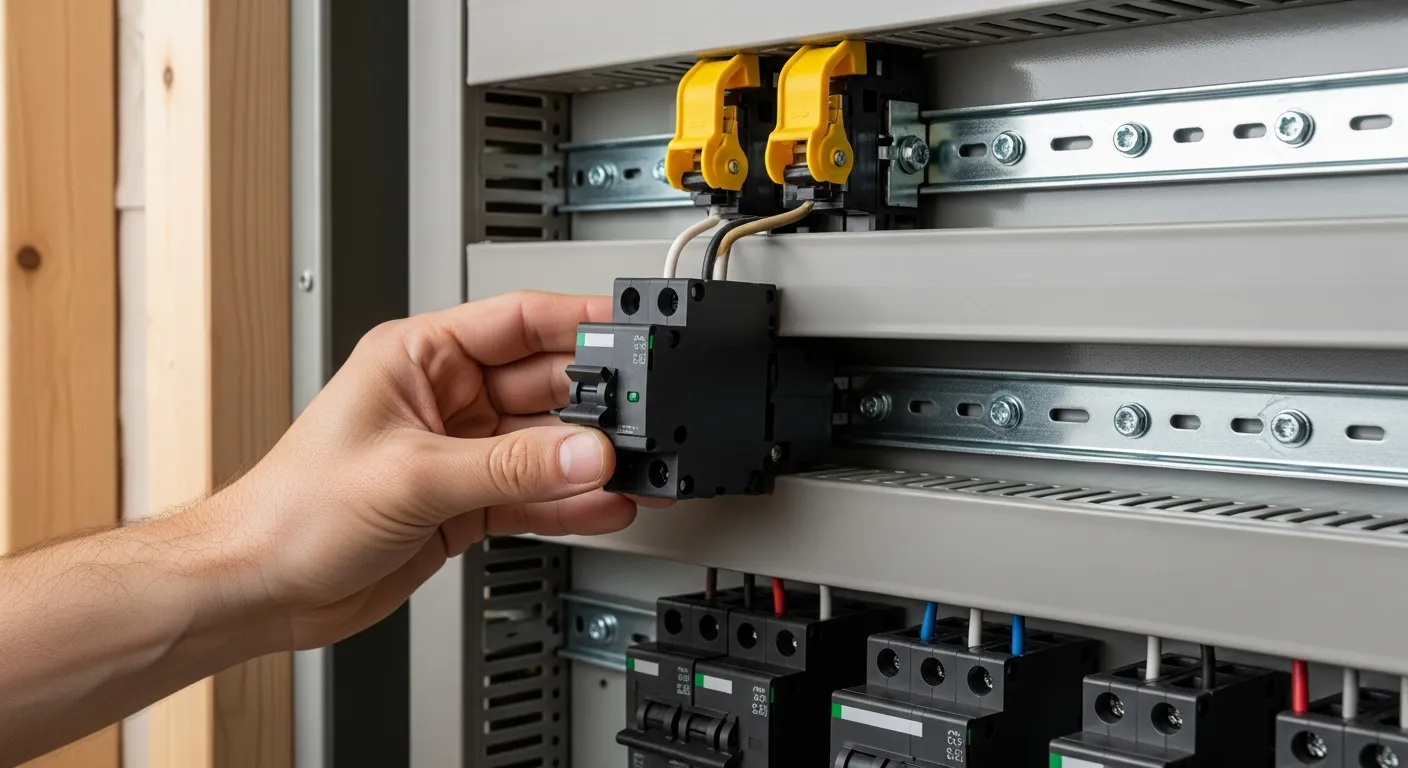
A professionally installed whole-home surge protective device, or SPD, works at an entirely different level than a retail strip.
It is installed directly at your electrical panel, which means it sits at the entry point for all electricity coming into your home. When a surge arrives through the utility line, the SPD intercepts it before it has a chance to travel through any circuit in your house. Every outlet, every hardwired appliance, every circuit is downstream of that protection point.
The technology is also more robust. Whole-home SPDs are rated in kilojoules rather than joules, meaning they are designed to handle surge events that would instantly overwhelm a retail strip. They use parallel MOV configurations and more sophisticated clamping circuitry that responds faster and handles higher-amplitude events.
They are also designed to handle the internal surge problem. A quality whole-home SPD addresses both externally generated surges coming from the utility and internally generated ones from large appliances cycling on your own circuits.
For homeowners in Everett who are running smart home systems, home offices, or have recently installed an EV charger, the protection gap with strip protectors is even larger. A Level 2 EV charger draws significant amperage and its electronics are expensive to replace. A whole-home SPD covers it. Your strip does not even reach it.
The Layered Approach That Licensed Electricians Recommend
The best protection strategy is not whole-home or strip. It is both, used together for different purposes.
A whole-home SPD at the panel handles the large, fast, high-energy events that strip protectors cannot catch. Point-of-use protectors at desks and entertainment centers add a secondary layer for smaller residual surges and provide added protection for the most sensitive electronics.
What that combination gives you is true layered protection across every circuit in your home. The whole-home device stops the big hits. The point-of-use strips handle the residual.
But the whole-home device has to come first. There is no point layering strip protectors over an unprotected panel.
What Surge Protector Installation in Everett Looks Like?
A licensed electrician in Everett will start by assessing your current panel to confirm it is in good condition and has space for the SPD connection. The installation itself is typically completed in a few hours and does not require any disruption to the rest of your home's wiring.
The SPD is mounted at or near the panel and connected directly to the main conductors. After installation, your electrician will verify proper grounding, confirm the device is responding correctly, and walk you through what the indicator lights mean and when to call for a checkup.
It is not a complicated job when done by someone who knows your panel and your local grid. It is also not expensive relative to what it protects. A single lost HVAC control board in an Everett home can run $800 or more to replace. A whole-home SPD costs a fraction of that and covers your entire electrical system for years.
Your Home Deserves More Than a $30 Strip
If you live in Everett and you have been relying on retail strip protectors to cover your home, it is worth taking a closer look at what you are actually protecting and what you are leaving exposed.
A licensed electrician can assess your current setup, explain what a whole-home surge protective device would cover in your specific home, and give you an honest picture of your surge risk based on your neighborhood, your panel, and your appliance load.
Schedule your surge protection assessment today.

