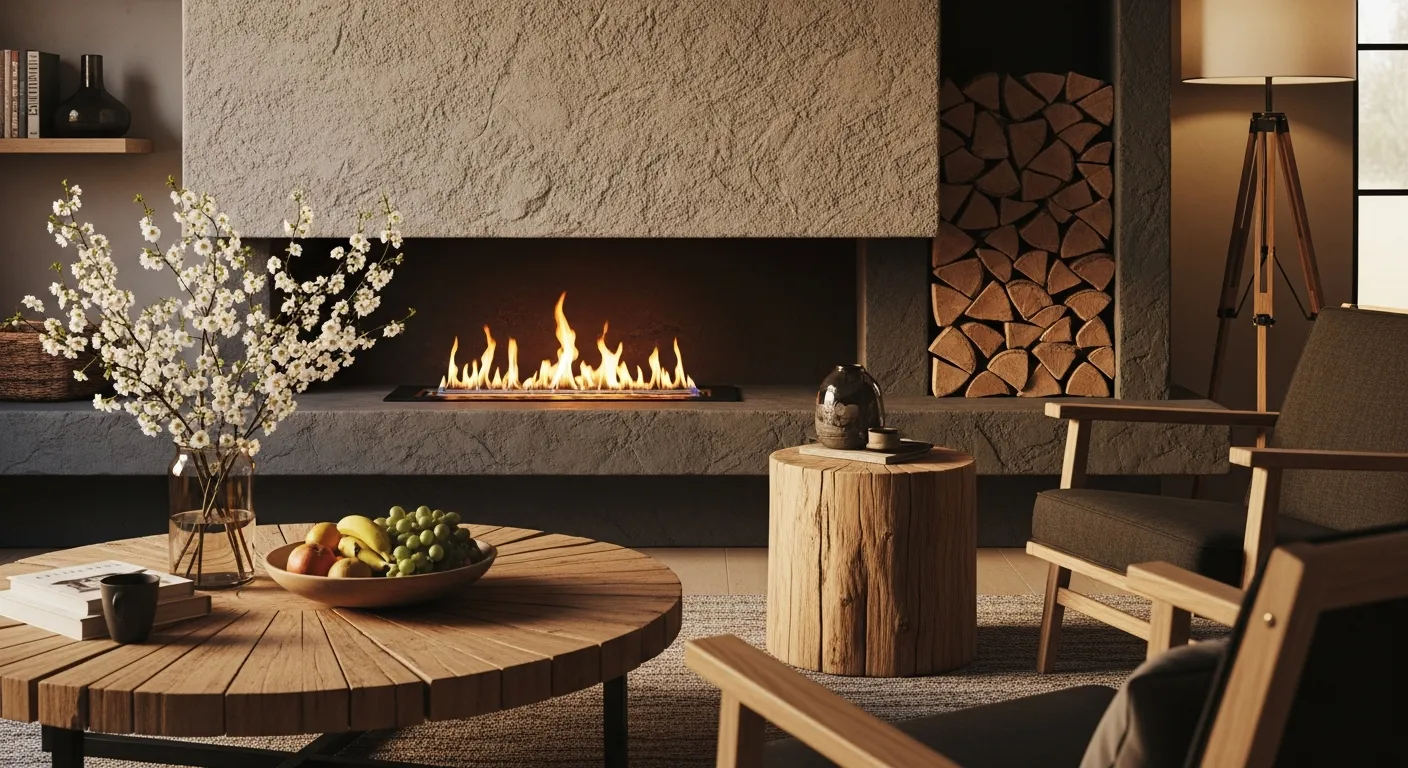
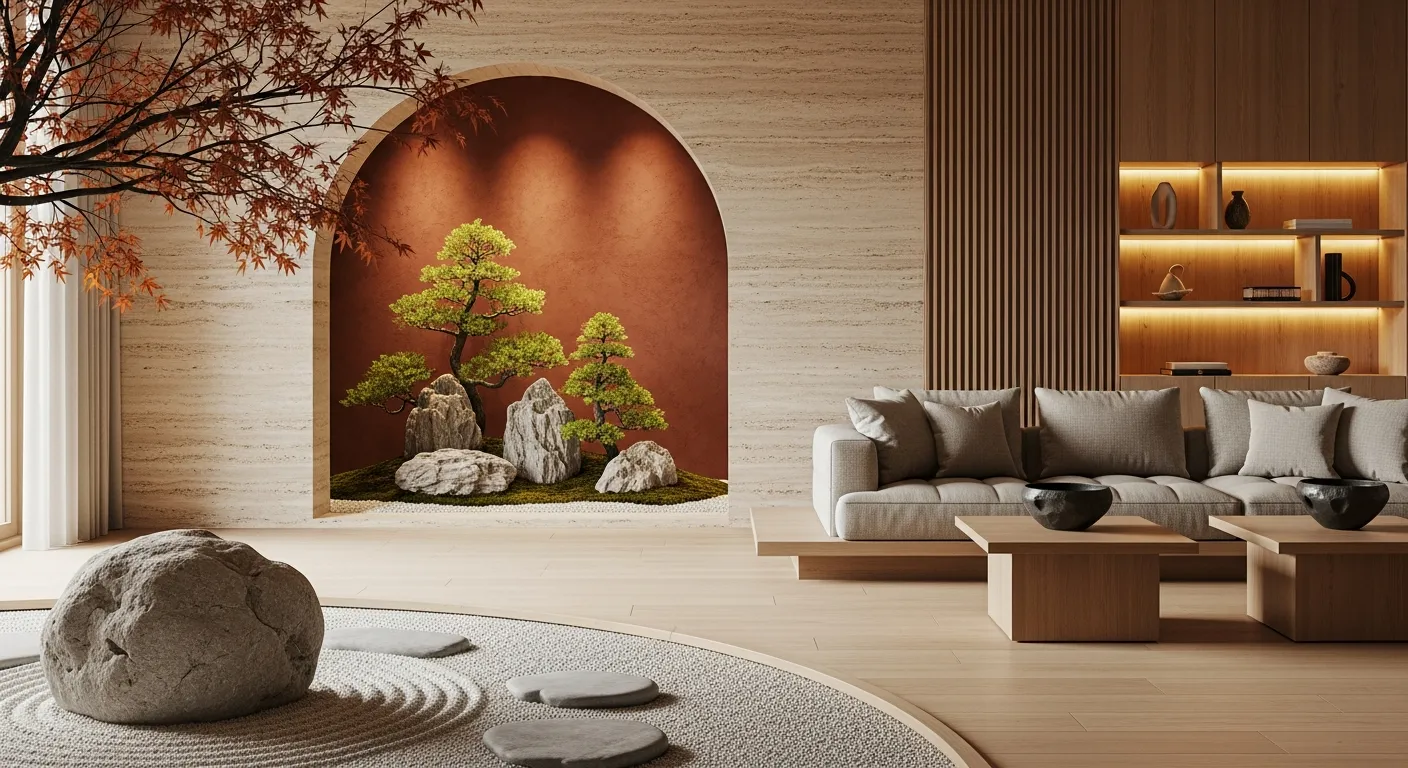
Modern homeowners often search for interior design that offers comfort and functionality in a single package. Japandi interior style is one of those emerging designs that creates a peaceful, clutter-free environment. It remains a classic choice for homes of all sizes. This style is known for providing a timeless approach to modern interior designs. This blog compiles information on the Japandi interior, including its origins, key features, and how it differs from Scandinavian interiors.
What is Japandi Interior Style?
Japandi interior style is a beautiful blend of Japanese minimalism and Scandinavian design. Japandi style combines the elegance of Japanese design with the warmth and comfort of Scandinavian interiors to create a calm, cozy, and classic space. It together focuses on maintaining simplicity and sustainability.
Elements of Japandi Style:
- Neutral and earthy color palettes.
- High-quality natural materials like wood, linen, or stones.
- Clean and nature-inspired aesthetics.
- Organic shapes with smooth textures.
The Japandi interior style is heavily inspired by the Japanese philosophy of wabi-sabi, which values minimalism and imperfection. It also includes the Scandinavian concept of hygge, which emphasizes comfort and well-being. The fusion of both concepts eventually creates balanced, practical, and sustainable beauty. Japandi interior style is the perfect design for those homeowners who wish to create a welcoming environment in their home.
Origins of Japandi Interior Style
The roots of the minimalist Japandi interior style can be traced back to the 19th century, when Japan was influenced by outsiders. During that phase, Scandinavian designers became the first ones to be inspired by Japanese culture and design ethics. The original Japanese aesthetics were profoundly shaped by Zen Buddhism, which emphasized simplicity, balance, and peaceful living.
On the other hand, Scandinavian design originated in the cold, resource-limited climate, where architects created functional, cozy interior settings. Due to their origins in different parts of the world, both Japanese and Scandinavian cultures are diverse.
Nonetheless, both styles share similar values. Natural light and materials, well-designed craftsmanship, a clear setup, and a deep sense of calm in daily life are among the commonly shared values. The fusion of Japanese and Scandinavian philosophies gave rise to the original Japandi style, known for its simple, calm nature.
How is Japandi Interiors Different from Scandinavian Interiors
To better understand the Japandi interior style, it is important to understand the differences between Japanese and Scandinavian design.
| Criterion | Scandinavian Interior Design | Japandi Interior Design |
| Philosophy of Design | Scandinavian interior offers simplicity, comfort and functionality while maintaining a warm and welcoming feel. Scandinavian interior follows the concept of hygge as it focuses on providing a cozy and relaxed lifestyle. | Japandi interior design is a fusion of Japanese minimalism and Scandinavian interior style. The combination eventually creates a space that feels calm, balanced, elegant and uniquely yours. |
| Color Theme | The Scandinavian interior consists of a color palette that features soft neutral shades like white, gray, beige, and black with a little hint of mix of other neutral tones. The contrasting dark tones are often used to create drama to the space. | Japandi interior style uses muted pastel tones along with soft tones of greens, warm browns and other nature-inspired shades to create a serene and nature-friendly feel. |
| Material & Texture Type | To embrace the overall beauty, Scandinavian design uses layered textures like velvet, leather, knits, linen and crochet to create a cozy living space. | To add warmth in the space without overwhelming it, Japandi style uses more natural materials like wood, bamboo or soft brushed fabrics. |
| Furniture Style | Despite the minimal neutral color palette, the furniture pieces give a modern, elegant and visually appealing feel to any space. Furniture with clean graphic lines and clever small-space solutions makes it attractive. | Japandi interior style uses sculptural accented chairs as it offers a minimal yet artistic look due to the blend of Scandinavian style with Japanese craftsmanship. |
| Decor Idea | Scandinavian design uses decorative elements like bookcase, textured cushions, statement coffee table and layered accessories to create an aesthetically appealing feel. | Japandi interiors purposely keep the decor minimal and intentional in order to drive focus on curated pieces that adds drama while maintaining a calm vibe in the space. |
| Final Look | Scandinavian style offers a modern and cozy feel without involvement of other styles. | Japandi style offers elegance with the harmonious blend of minimalism of both styles. |
Key Characteristics of Japandi Interior Style
The following are four major characteristics of Japandi interior style:
Natural Materials and Organic Textures
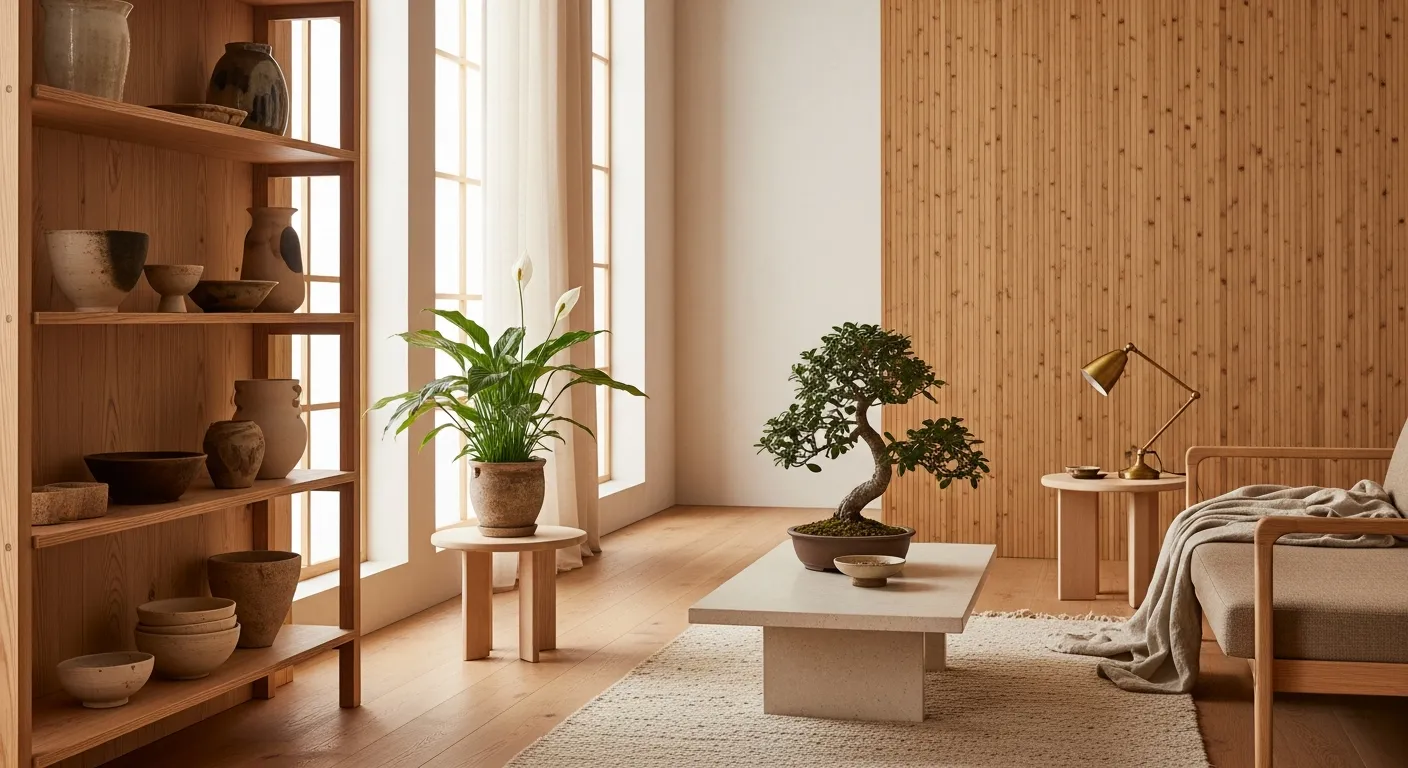
- Japandi interiors primarily use natural, sustainable materials to convey authenticity.
- Different types of wood, such as oak, bamboo, pine, and beech, are used for their grainy, rich textures and warm appearance.
- Natural stones such as marble, travertine, limestone, granite, and slate are used in Japandi-style homes. These materials are durable and offer natural textures and patterns.
- It is crafted from clay to reflect the Japanese concept of embracing imperfection and from handmade ceramic pieces to show the effort of craftsmanship. These ceramics are used as decorative elements, such as serving bowls, vases, or artistic statement pieces.
- Japandi styles also promote eco-friendly options by incorporating textiles such as linen, organic cotton, hemp, and wool. These materials consist of natural fibers that make the space comfortable and are the best alternative to synthetic materials.
- Japandi style also includes indoor plants such as bonsai trees, peace lilies, ferns, money plants, and bottle trees to create a calming sense of nature.
- To add character and depth to the interiors, Japandi also embraces metals like brass, bronze, copper, and nickel, and with time, they develop a natural, unique, aged appearance that looks attractive.
Minimalist Layouts With Functional Flow
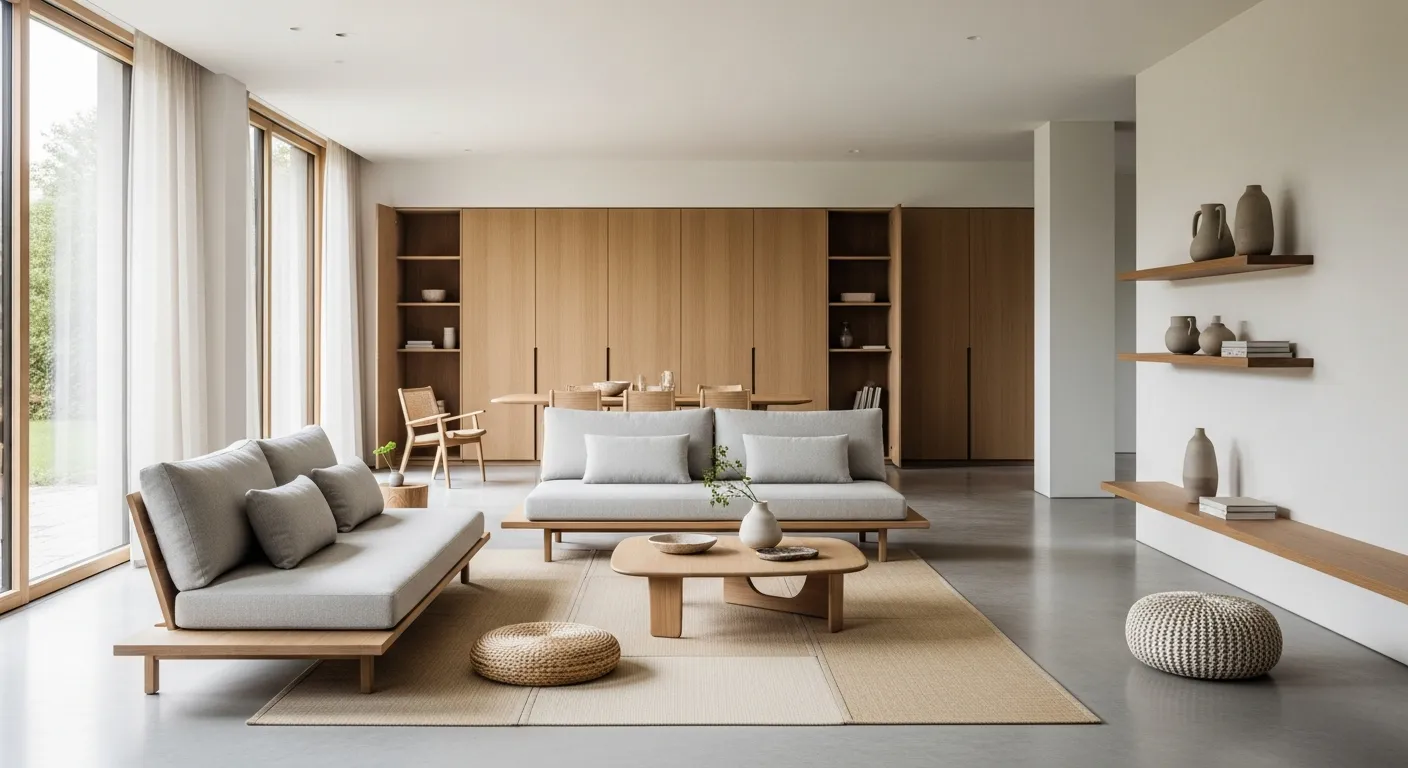
- Japandi style focuses on prioritizing simplicity, minimalism, and openness to create a breathable environment.
- Open floor plans,walkways and connected spaces promote smooth movement and create a spacious feel in the home.
- Japandi style also includes low-profile furniture and floor seating arrangements to maintain a grounded look. To create comfort, tatami mats, cushions, poufs, and sleek seating are often used.
- To maintain a clean look, flexible furniture pieces are used for easy rearrangement when needed. Multifunctional furniture, such as sofa beds, also adds aesthetic appeal without compromising practicality.
- Japandi style also consists of hidden storage options like built-in cabinets and wall-mounted units to keep the clutter away and maintain an organized look.
Soft Neutral and Earthy Tones
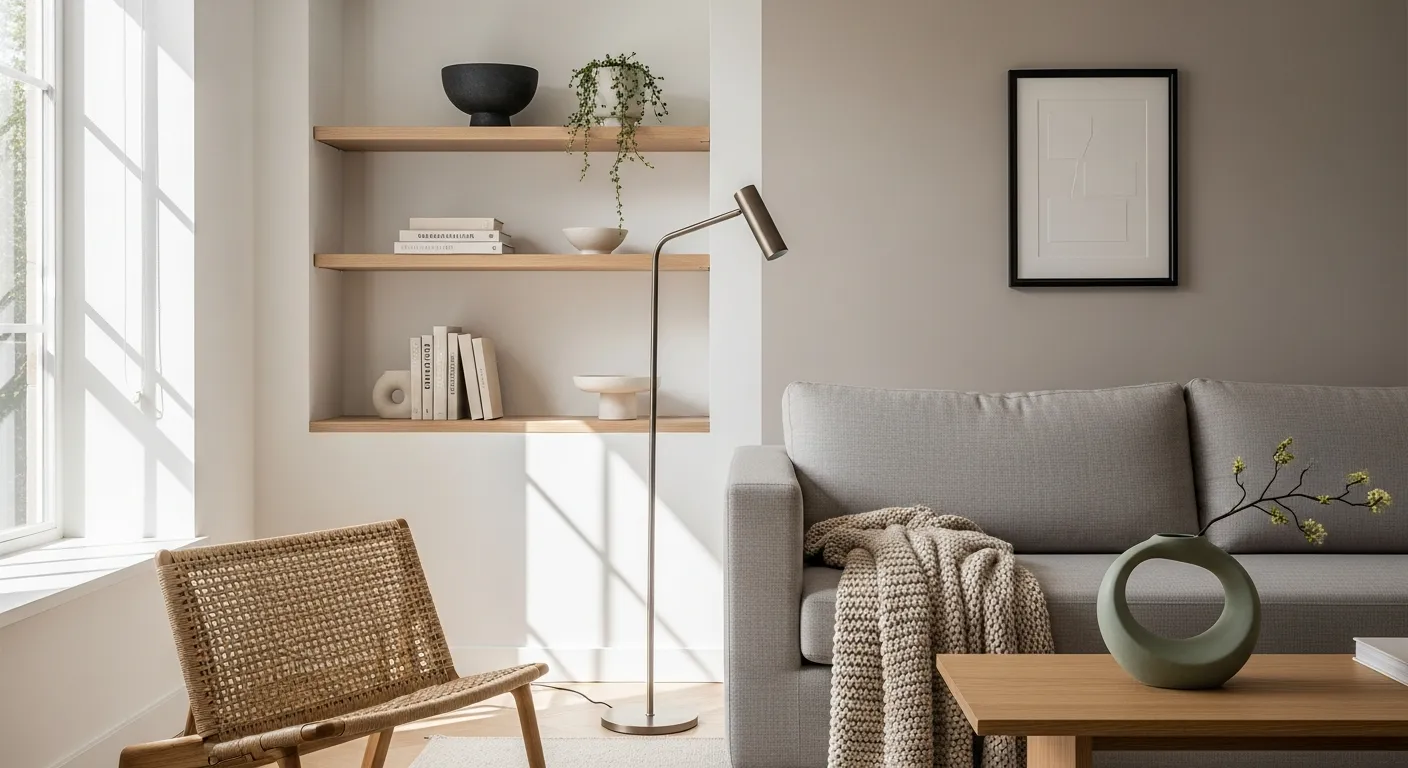
- The Japandi interior style is known for its soothing, muted tones that create a warm, welcoming feel.
- For walls and furniture, shades such as soft white, cream, beige, taupe, and warm gray are used to enhance minimalist aesthetics.
- Muted greens, browns, and stone grays are used to promote an organic, nature-friendly appeal in the space.
- Metallic shades in bronze or copper are used to balance the overall aesthetic without overwhelming the design's simplicity.
- Shades like charcoal, muted blue, and black are used as contrast.
Use of Lights and Space to Create Calm
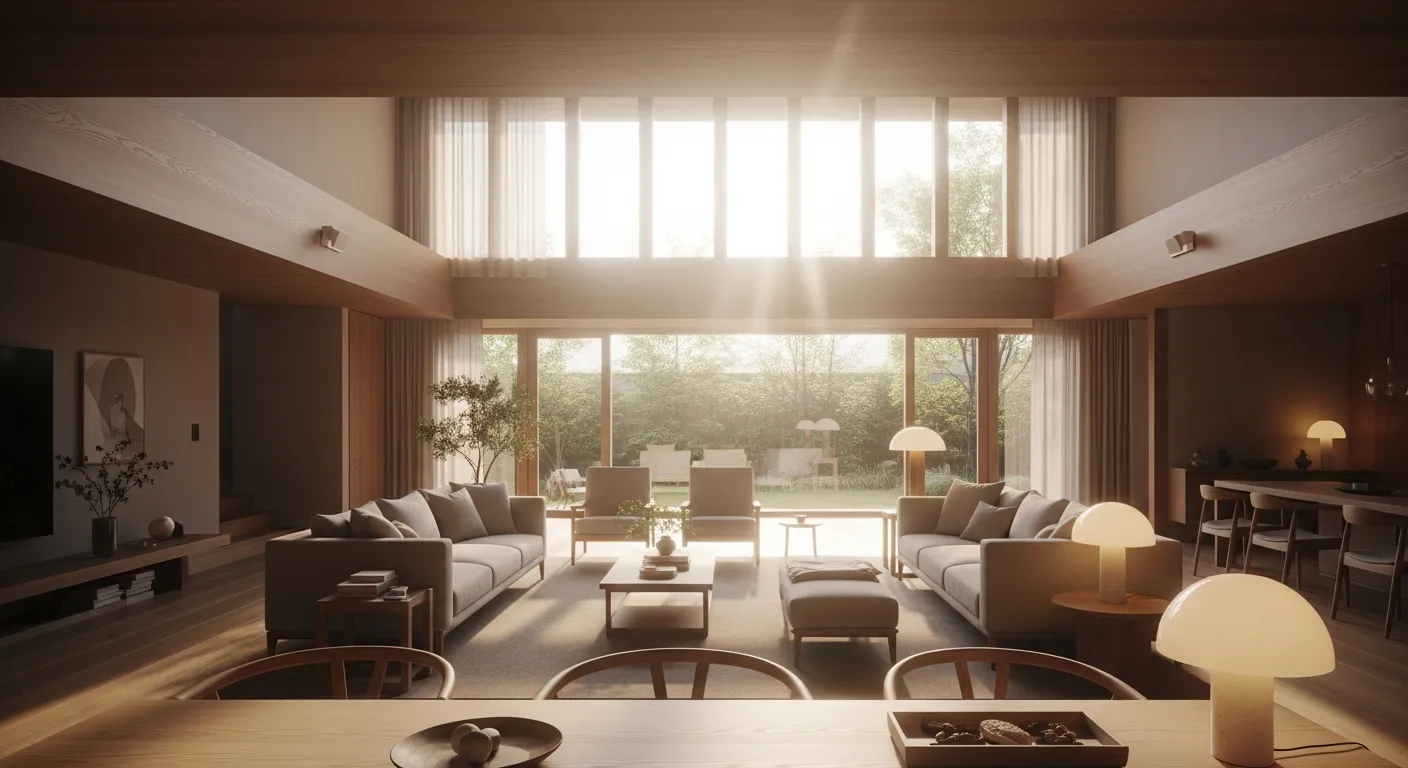
- The Japandi interior style uses natural light to create a spacious, airy feel.
- Use of large windows ensures effortless sunlight flow throughout the room.
- This style also includes diffused lighting fixtures, lamps, and other lighting to create a warm, relaxing atmosphere.
- While adding lights as a decor element, it is equally important to keep the space clutter-free to maintain its calm.
Is Japandi Interior Still Trending or Timeless?
Many homeowners wonder whether the Japandi interior is just a temporary trend or a timeless design style that can remain relevant for years. The real verdict lies in the timeless nature of its core elements. Japandi style is well known for combining minimalism and functionality with comfort through clean lines, soft neutral shades, and natural materials like wood, linen, and stone.
Despite being popular in modern interior households, the appeal of Japandi style goes beyond trends as it aims to provide calmness with a visually balanced look. One of the major features of the Japandi style is its flexibility. Homeowners with different personal tastes can easily customize it without losing its essence. Instead of becoming obsolete, the Japandi style evolves naturally with your lifestyle and changing aesthetic tastes.
Can Japandi Style Work in Small Spaces or Apartments?
Homeowners with small spaces are often concerned about whether Japandi is suitable for their homes. The reality is, it can easily fit in small apartments without making the entire space feel overcrowded. In fact, Japandi style is the most suitable option for decorating a compact apartment. Since Japandi emphasizes open floor plans, functionality, and natural lighting, it makes any small space feel larger and more comfortable than ever.