
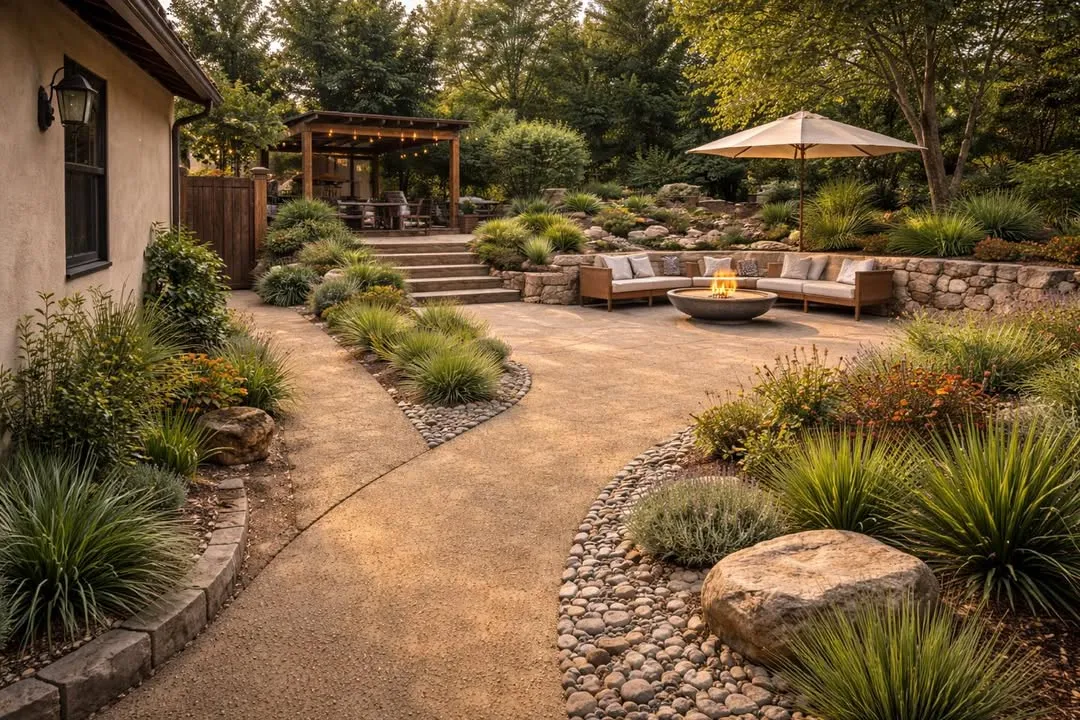
Decomposed granite is one of the most popular landscaping materials preferred for its rustic charm, cost-effectiveness, and functionality. It is a finely crushed natural material derived from weathered granite. This sandy texture comes in diverse color options, such as gray, brown, and gold, and blends seamlessly into different designs. You can get decomposed granite in various types, including loose DG, stabilized DG, and resin-coated DG. Whatever decomposed granite type you use, you need the right installation method.
Benefits of Installing Decomposed Granite?
Many homeowners use decomposed granite for a wide range of benefits. Here are they:
- Decomposed granite is one of the most cost-effective landscaping material options compared to concrete or pavers.
- The natural aesthetic of decomposed granite seamlessly fits any landscaping style, whether rustic or modern.
- Decomposed granite is also popular because it's easy to install and requires fewer tools.
- Water filters through decomposed granite's permeable surface, reducing runoff and supporting sustainability.
- Finally, decomposed granite is also low-maintenance, unlike mulch or grass.
Applications of Decomposed Granite?
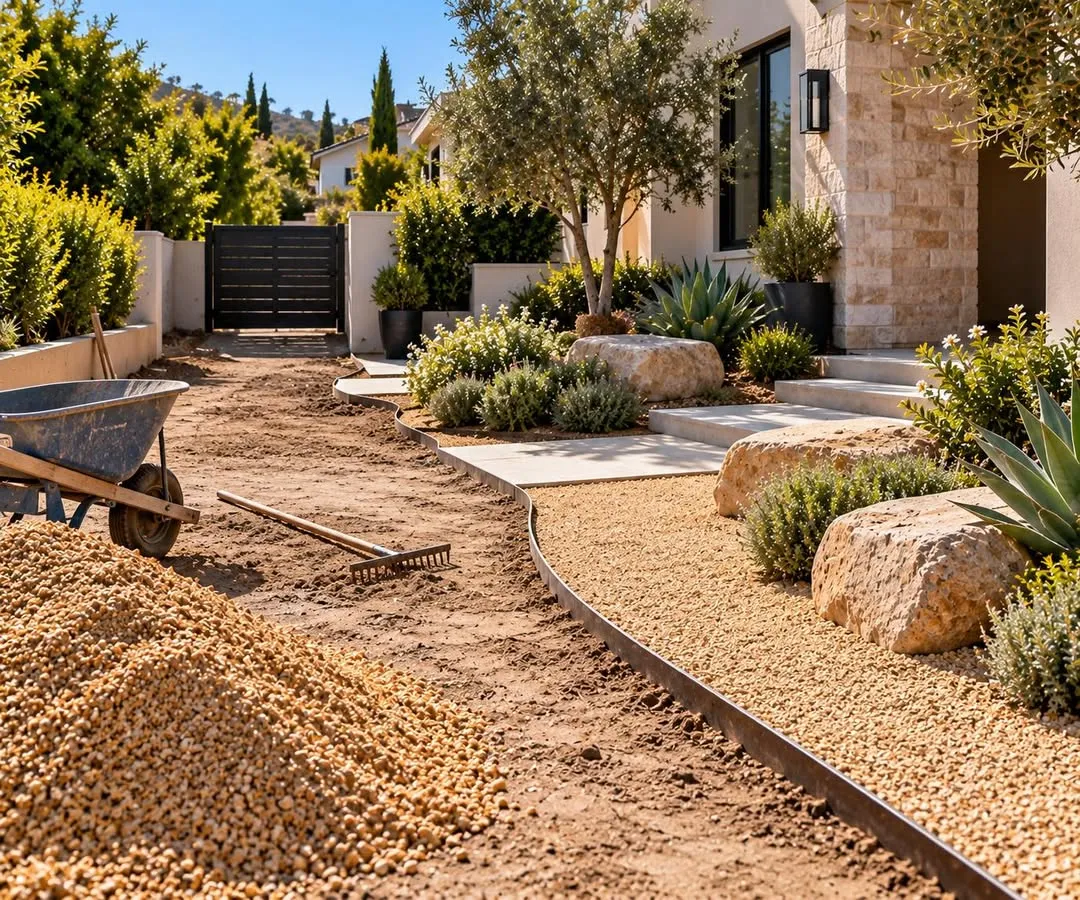
Decomposed granite can be used in various places. Here are some of the common areas where DG is used.
- Walkways and pathways
- Courtyards and patios
- Driveways
- Playground surfaces
- Drought-tolerant gardens and Xeriscaping
What Will You Need to Install Decomposed Granite?
You can install decomposed granite efficiently only if you have the right tools. Here is a list of tools that you must keep handy before the installation process begins.
- A compact layer of crushed stone or road base.
- Decomposed granite of an appropriate type such as stabilized, loose, or resin-coated.
- Restraints made up of steel, concrete, aluminum, or stone.
- Plate compactors for larger areas and hand tampers for smaller spaces.
How Much Decomposed Granite Do You Need?
You can make a small calculation to determine how much decomposed granite you need.
- Calculate the Square Feet of an Area = Length * width.
- Choose the Decomposed Granite Depth = 2 inches for patios or pathways and 3 inches for heavy-use areas.
- Calculate Cubic Yards = (Square feet * depth in inches/ 12)/ 27
However, if you are confused, you can always take suggestions from your granite supplier based on your square foot area.
How to Install Decomposed Granite?
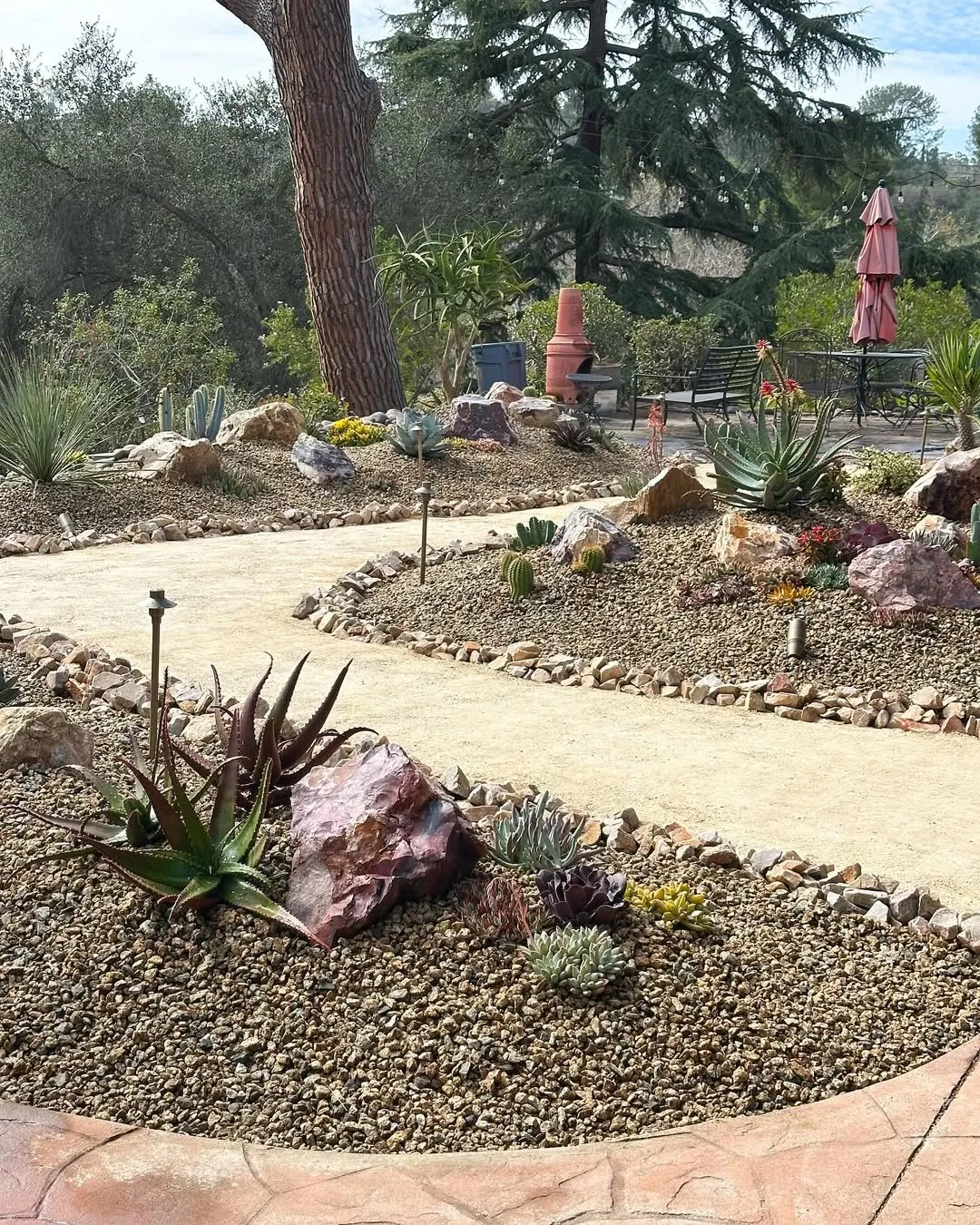
Following the right installation steps is the key to structural integrity. Here are the steps:
Step 1: Assessing the Site
You must check the site for sunlight exposure and drainage so that you can pick the appropriate decomposed granite from loose, stabilized, and resin-coated options.
Step 2: Accurate Measurements
Measure the square-foot area properly and add appropriate boundaries for the excavation process.
Step 3: Clearing the Area
Start by clearing the area of any roots, debris, or any other materials before the excavation work begins.
Step 4: Excavation
Dig about 4 to 6 inches according to your requirements. For pathways, you can have lesser depths, but you need to dig deeper for driveways to manage vehicle weight without difficulty.
Step 5: The Gravel Base
Adding a gravel base is essential for proper drainage and for higher stability for the decomposed granite layer. Add a gravel layer of about 2 to 3 inches to prevent water accumulation and shifting of the DG layer.
Step 6: Compact the Base
After you add the gravel base, use a mechanical compactor to compact it. If the compaction is done properly, the decomposed granite will sit evenly and stay stable for several years.
Step 7: Spread and Layer the Decomposed Granite
Now comes the most prominent step of spreading decomposed granite. Spread thin layers of granite to about 2 inches at a time to ensure that the DG is evenly applied everywhere without clumping.
Step 8: Stabilization
Stabilizers are substances added to decomposed granite to enhance durability and reduce erosion. Thus, adding a stabilizer is a must when you are installing decomposed granite for a high-traffic area such as a driveway.
Step 9: Compact Each Layer
Once you spread a layer of decomposed granite, use a plate compactor to compact it. Repeat this process of spreading DG and then compacting it so that it reaches a depth of about 3-4 inches. This process will ensure the stability of the DG and will reduce the chances of erosion.
Step 10: Level the Final Layer
After spreading and compacting the last layer, use raking to get rid of any bumpy elements such as debris from the surface.
Step 11: Add Edging
Add metal, stone, or wooden edging to maintain the design’s clean lines and to prevent erosion.
Step 12: Water the Surface
Offer light watering for the DG to settle down and the stabilizer to activate for binding and enhancing durability.
Common Mistakes to Avoid When Installing Decomposed Granite
Even when you follow the steps diligently, a few mistakes can compromise the surface. Here are some of the common mistakes that you must avoid when installing decomposed granite.
- Avoiding compaction in every layer will lead to an uneven surface and shifting.
- Not adding sufficient gravel base results in poor drainage, ultimately causing erosion.
- Not using stabilizer for high-traffic areas will loosen the surface and will require regular maintenance.
- Not adding proper edging will erode the clean design lines.
- Incorrect selection of decomposed granite type can cause early damage to the surface.
- Overwatering during compacting will lead to uneven consolidation.
- Spreading too thin layers will break down, exposing the base soon.
How to Maintain Decomposed Granite After Installation?

The installation of the base and the DG layers highly impacts the durability of the surface. However, there are some maintenance tips to follow for long-term results.
- Regrade the loose decomposed granite to maintain the appearance of the surface.
- Periodic dressing of the surface will keep uneven spots away.
- Do not forget to add a stabilizer in high-traffic areas.
Moreover, after the installation, inspecting the surface occasionally and adjusting it wherever required is one of the best ways to maintain the aesthetic of the surface.
Conclusion
Whether you wish to get landscaping done on the driveway, patio, or walkways, decomposed granite is one of the best materials for such purposes. However, you must know the appropriate DG type suitable for your application and the correct installation steps. Adding a gravel base, spreading appropriately thick DG layers, leveling, and compacting them are some of the prominent steps to follow for a durable and error-free installation.