
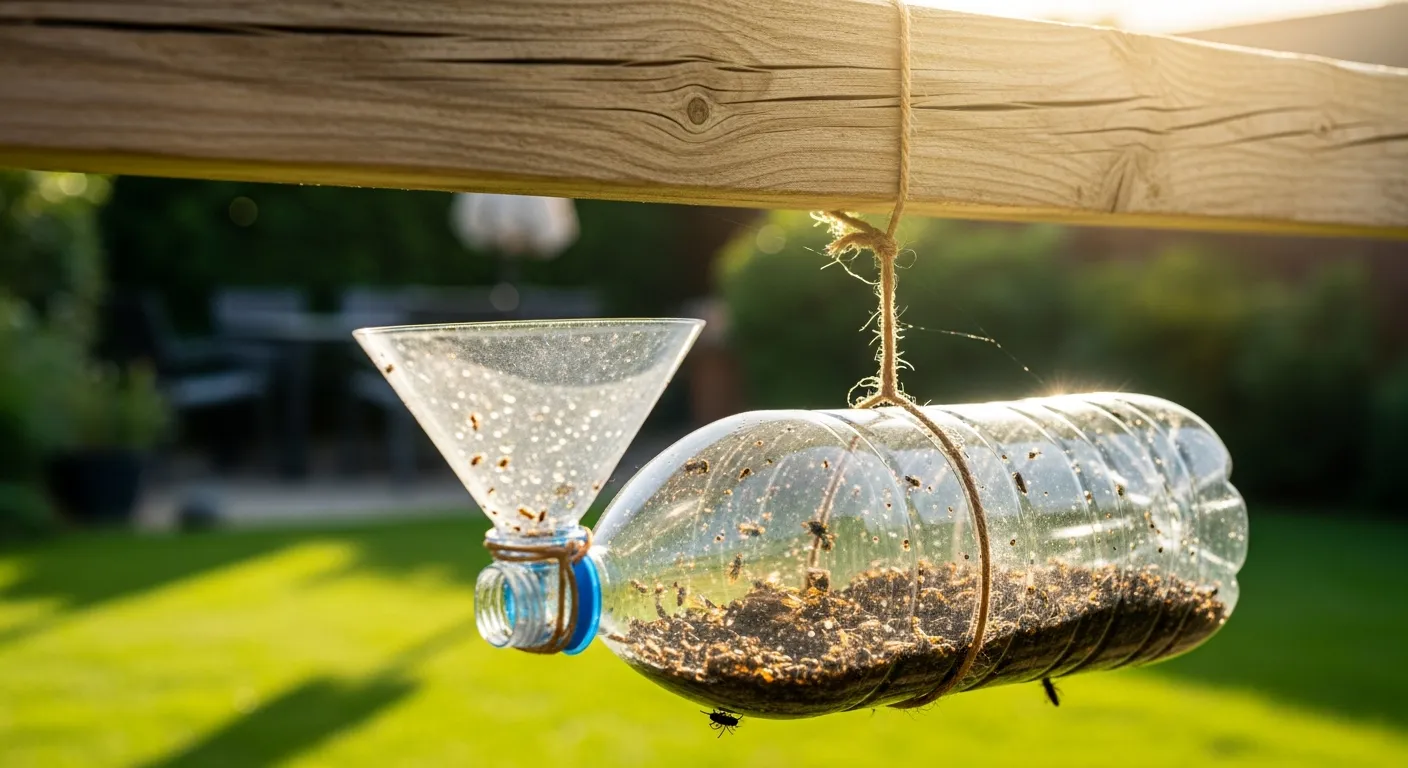
Have you noticed wasps around your house? Though they are not harmful, they help fertilize plants. However, they can be a nuisance if you have an allergic issue.
However, many chemical sprays can be used to eliminate them. But a homemade wasp trap is useful because it's easy to make and use. You can make the DIY trap every year because it's inexpensive and has no side effects. This blog is all about how to make homemade wasp traps, how to use them, and how to store them to attract wasps.
How to Make a Homemade Wasp Trap?
Method 1: Plastic Bottle Wasp Trap
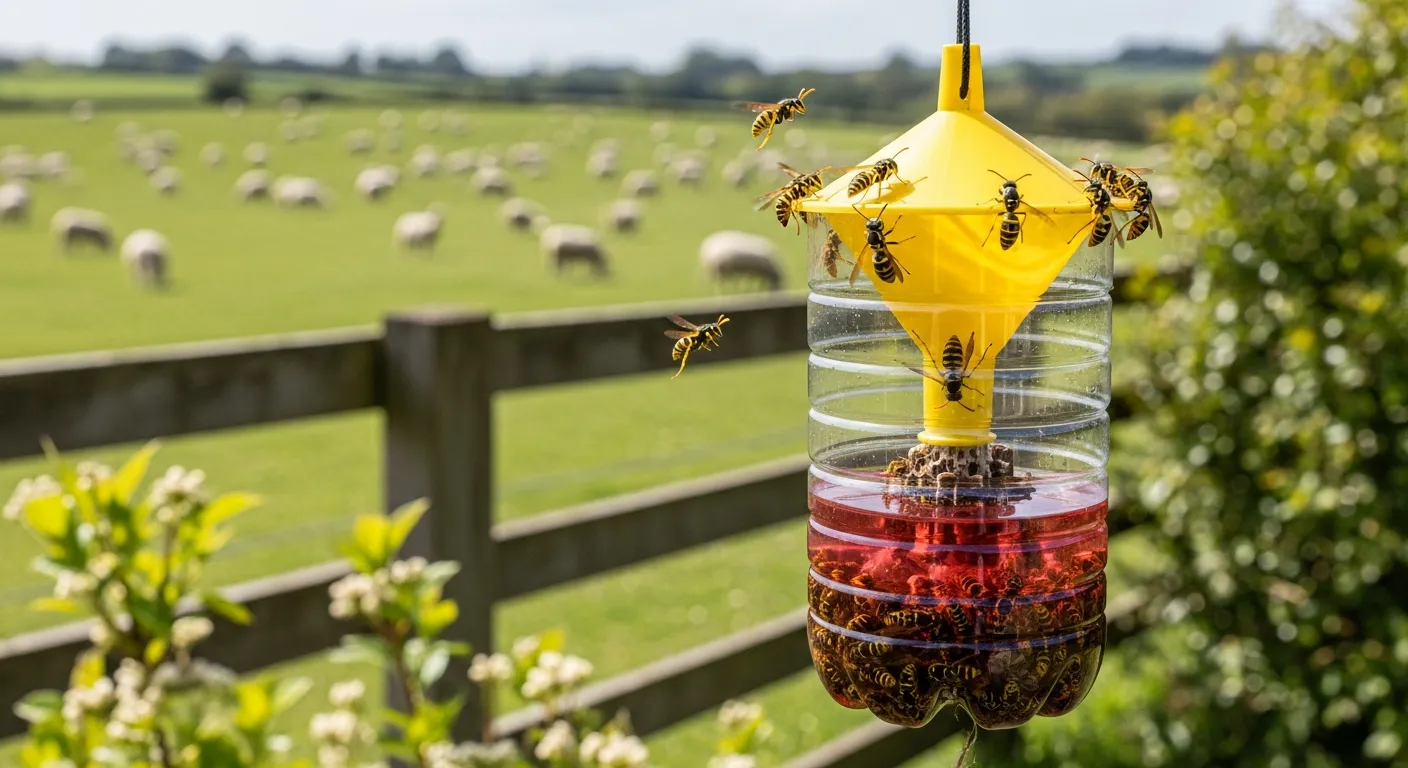
Step 1: Gather the necessary tools and materials.
Tools:
- Permanent Marker
- Knife
- Large rubber stand
- Hole punch
Materials:
- 2 litre soda bottle
- A piece of wire to hang the plastic trap
- Sweet food sources like sugar, jam, juice or wine
Step 2: Mark the Bottle from where you have to cut
Take a permanent marker and draw a straight line around the top of the bottle, right where it starts to narrow toward the neck. To get a perfect straight line, use a rubber band or a piece of string and wrap it around the bottle to act as a guide.
Step 3: Cut off the top
Take a knife, box cutter, or a pair of sharp scissors and cut the top of the bottle along the drawn line.
Step 4: Add the Bait into the Bottle
Put the sweet ( wasp food) at the bottom of the bottle to attract the wasps. The best food item to use depends on the season.
- Spring to Early Summer: Wasps crave protein in this period. Put a small piece of lunch meat or raw hamburger in the trap.
- Late Summer to Early Fall: In this climate, wasps look for sugar. Pour a few inches of sugar water, juice, soda, or water mixed with jam into the trap.
| Some Tips |
Never use honey, as it will attract honeybees. To avoid bees, add a little vinegar into the sweet mix trap. You can add dish soap into the mixture to help trap the wasps. |
Step 5: Put the Trap Together
Take the cap off the bottle. Flip the top piece you cut off upside down and push it down into the bottom half of the bottle. The trap is now ready to catch wasps.
Method 2: Jar Wasp Trap
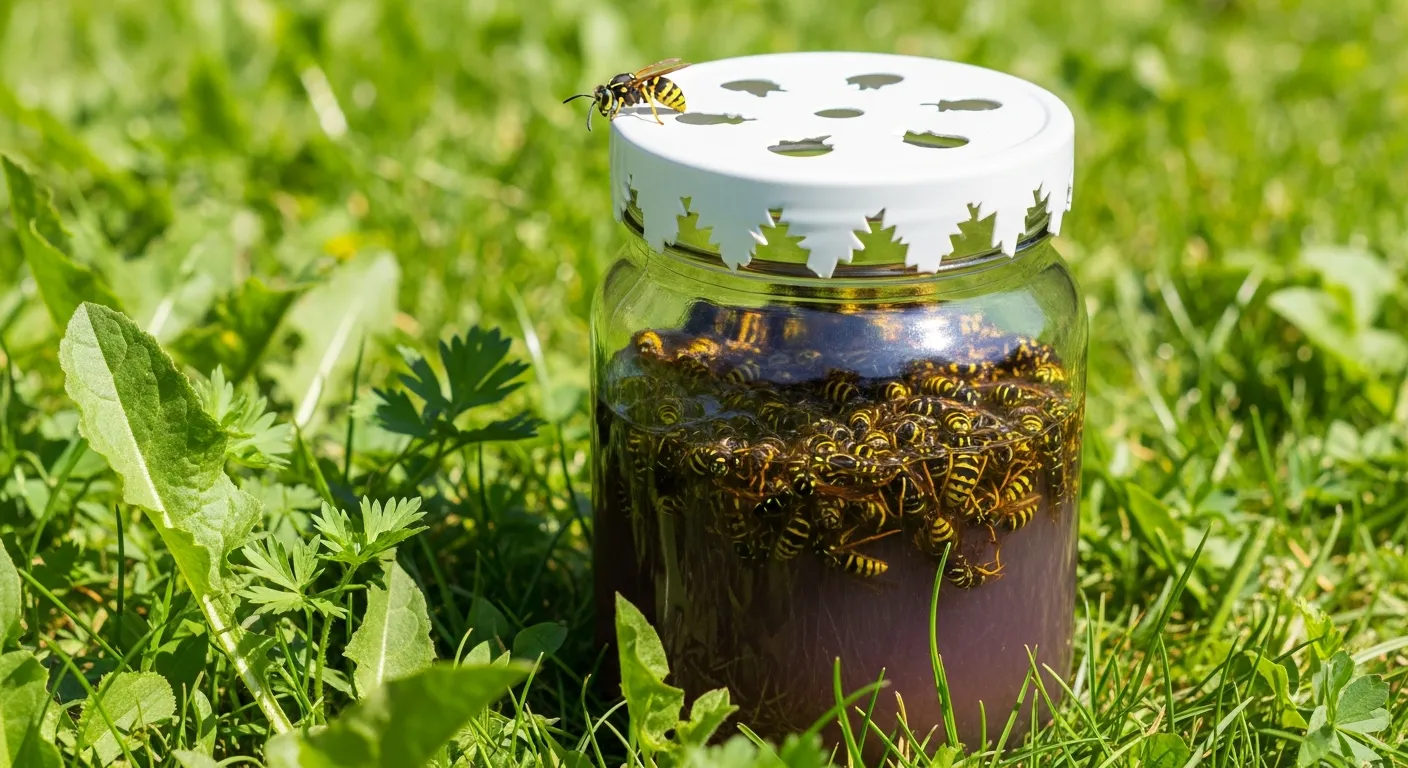
Step 1: Gather all the materials:
- A glass jar and its lid
- Orange juice, or any sweet drink, or a spoonful of jam
| Some Tips |
A raspberry or strawberry flavor works best to attract wasps because the smell is strong and familiar to them. |
Step 2: Assemble the materials
Drill a hole in the lid that is about the width of your pinky finger. The size is important because if the hole is too small, the wasps won't go inside, and if it's too large, they will easily escape the trap.
Fill the jar halfway with the sweet juice, and smear jam on the underside of the lid. Screw the lid on tightly and place the jar far away from areas where people sit or walk.
The smell pulls the wasps into the jar, and they drop into the liquid. Once they are inside the jar, they won't be able to find the exit and will drown after some time.
Best Placement- Place the jar in a sunny spot in your yard. Make sure you do not fill it to the brim or too high. Have plenty of empty air space inside so the wasps fall in and cannot climb out.
Cleaning Time - Change the liquid every two or three days. Always wait for evening to arrive before you empty the jar and refill it. The schedule matters because wasps rest at night, so they are less active and unlikely to sting you when it's a little dark.
Where Should You Place a Wasp Trap?
Whether your trap would be successful or not depends highly on location. So it's important to observe your surroundings before placing the DIY trap. Here are a few places you can fix your trap.
- Away from seating areas: To avoid hurting yourself and your family members with a wasp bite.
- Near nesting or feeding locations: To quickly attract the wasps and get rid of them faster.
How to Prevent Wasps From Returning?
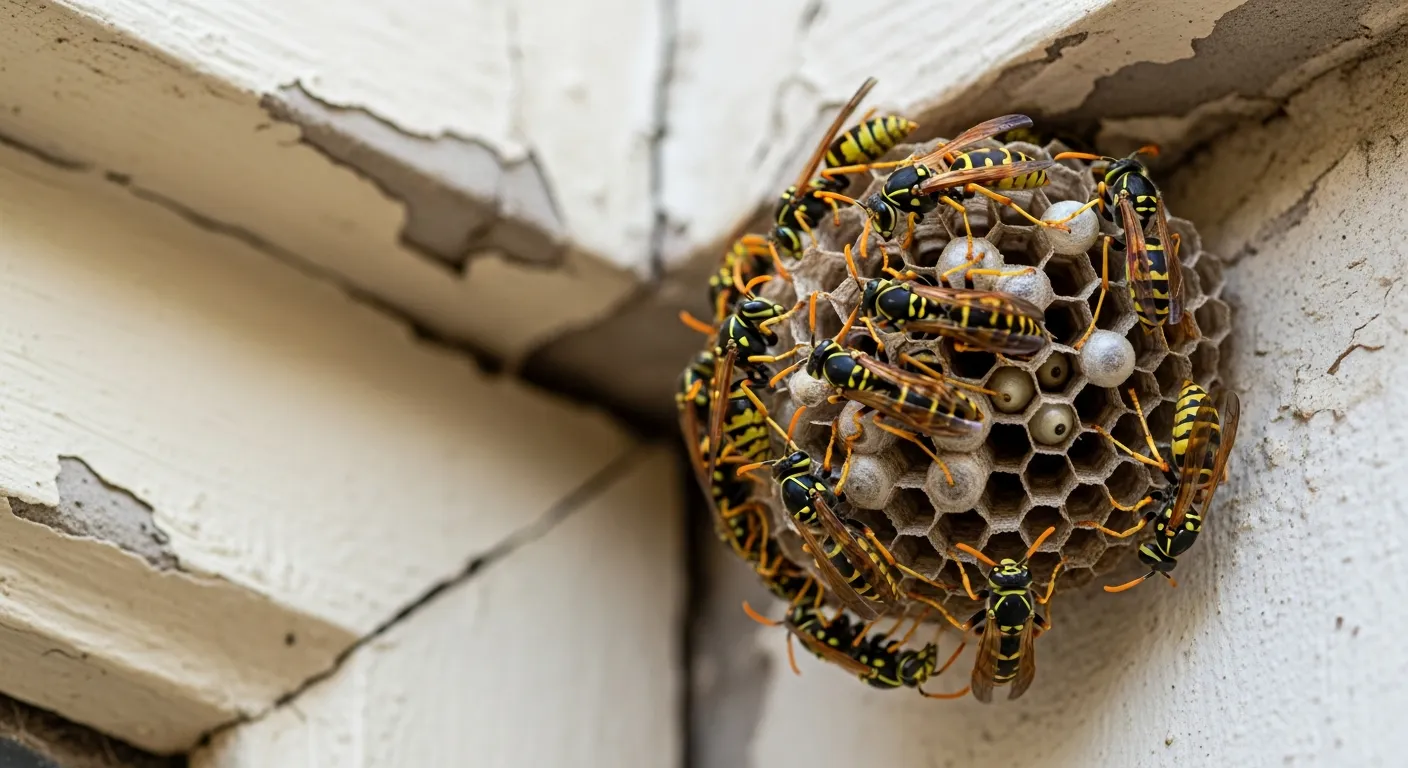
There are multiple ways to stop wasps from coming back. These ways demand continuous practice; only then will you be free from wasps every year.
Remove Food Sources
Wasps crave fruits, so limit fruit-bearing plants near seating areas so that sugary items are less available for them. Any sweet fruit on the ground is a major wasp magnet, especially late in the summer.
Seal Garbage Bins
Keep your garbage and recycling bin tightly closed. Leftover food stuck inside the bin is another major reason wasps hang around mostly in the summer season.
Fix Standing Water
Wasps also get thirsty and feel warm in dry weather, which is why bird baths sit under standing water. You must also fix leaky outdoor faucets. Shallow ponds and dripping may pull more wasps too. Importantly, never leave puddles on the patio during hot or dry days.
Move Your Compost
Keep your compost pile away from your backyards or seating areas so the wasps also change their path.
Seal Cracks and Gaps
In the spring, queen wasps look for tiny holes to build new nests. Therefore, seal up wall gaps, siding cracks, and roof edges before they move in and start a serious infestation.
When to Call a Professional?
You must reach out to a professional expert for these three reasons.
- When wasps have spread a serious infestation inside walls, roofs, attics, sheds, or other structures.
- If you or a member of the family is strictly allergic to wasps, immediately contact an expert.
- If wasps are behaving wildly and their aggressiveness keeps on increasing or their stings become regular, a professional should only deal with this issue.
Conclusion
Homemade wasp traps are one of the helpful DIY methods. For example, the plastic bottle wasp trap is easiest to make and easiest to place. Just ensure you place it near the wasp nest, and away from seating areas and out of reach of children and pets. Additionally, keep changing the trap mixture every two to three days in the evening when wasps are less active.