
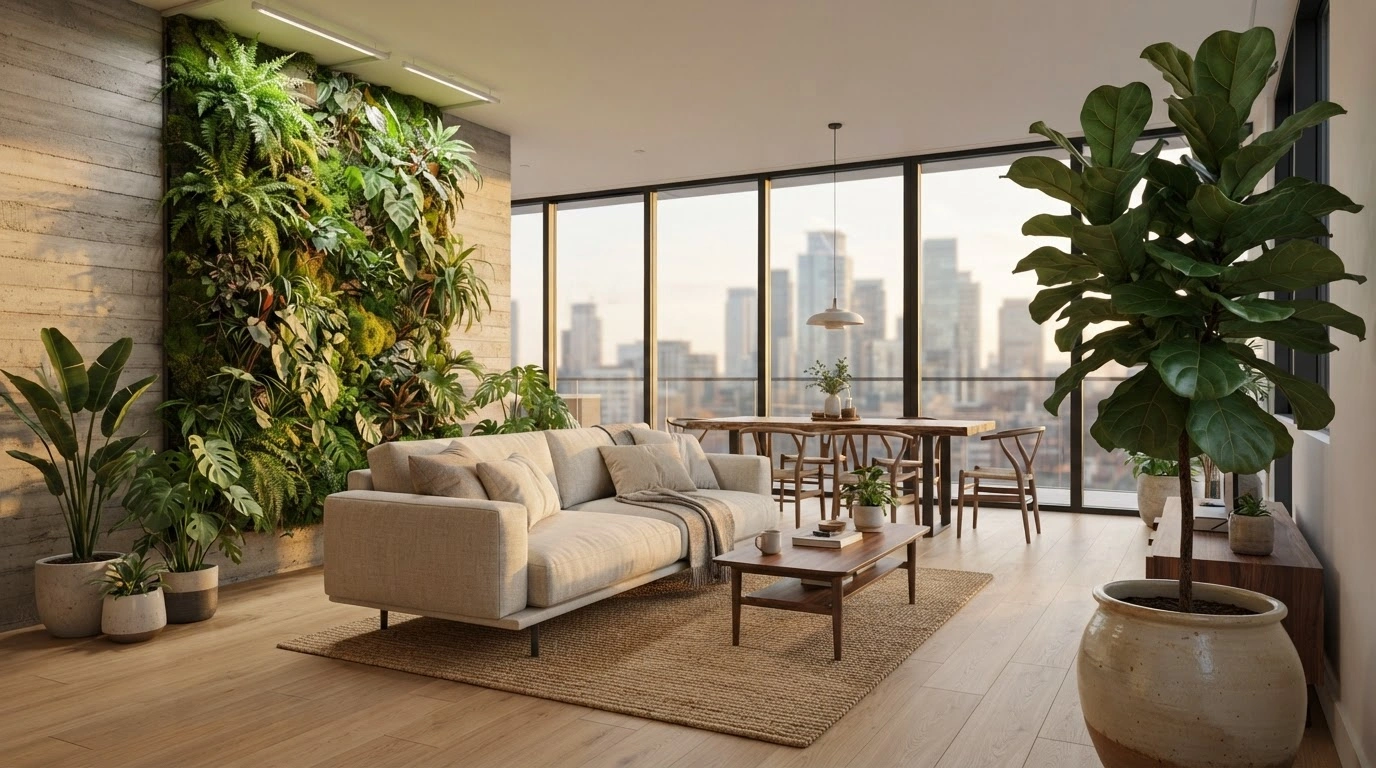
Biophilic interior design brings daylight, greenery and natural textures into the rooms where daily life unfolds. Its growing appeal makes sense: many people spend much of their time indoors yet still feel calmer and more comfortable when they can see plants, sky and organic forms. This design style translates that connection into practical choices, from orienting a desk toward a window to using wood with visible grain. The result can feel modern and polished while retaining the warmth and variation found outdoors.
The Rise of Nature-Centric Spaces
Interest in biophilic design principles reflects a broader desire for homes that support comfortable routines. Natural light, outdoor views and tactile materials can soften the hard surfaces and rigid lines often associated with contemporary interiors.
You don’t need a full renovation to try the trend. Start by clearing tall furniture away from windows, placing a reading chair where it receives morning light or choosing colors drawn from nearby scenery. Soft greens, clay tones and muted blues are easy to layer without making a room feel themed. For a closer look at balancing plants, materials and light, explore this practical guide to integrating biophilic design.
Select Authentic Natural Materials
Choose a few genuine materials and let their texture remain visible. Wood flooring, linen curtains, wool rugs and stone counters develop subtle character over time, giving a room more visual depth than perfectly uniform surfaces. Even one oak shelf or woven pendant can introduce warmth in a small apartment.
Consider durability alongside appearance. A busy entry may benefit from slate or another hard-wearing stone, while cork can add softness and sound control to a home office. Ask where a material came from, what finishes were applied and how it should be maintained. Low-sheen finishes usually preserve natural grain and texture more clearly, though every sample should be viewed in the room’s actual daylight before you commit.
Integrate Living Elements Indoors
Healthy plants add movement, color and seasonal change, but they need to suit the conditions in your home. Observe a room for several days before buying anything. Note how long direct sunlight reaches the floor and check whether heating vents create dry, hot spots.
A pothos or cast-iron plant can work in lower-light areas, while many succulents need a bright window. Group pots with similar care needs so watering stays manageable, and always provide drainage protection beneath containers. The broader ideas behind nature-inspired interiors also extend beyond houseplants. A vase of clipped branches, an indoor herb planter or a framed view of the garden can create a living connection without filling every surface.
Architectural Harmony from the Ground Up
Biophilic choices become easier when they’re considered during the earliest design stages. Window placement can capture morning light in a kitchen, frame a mature tree from the living room or connect an interior walkway to a courtyard. Deep overhangs and thoughtfully positioned openings can also help manage glare while preserving outdoor views.
People planning custom homes in Edmonton can discuss naturally inspired living, sustainable building practices and personal routines with their builder before the floor plan is finalized. Think through where you drink coffee, work and unwind, then use those habits to guide sightlines and room orientation. Structural decisions made early often feel more natural than decorative features added after construction.
Long-Term Wellness in Peaceful Rooms
A peaceful room supports the activity happening inside it. Bedrooms benefit from adjustable window coverings, soft textures and subdued colors. In work areas, daylight should reach the desk from the side to limit screen glare. Living rooms feel more settled when seating faces a window, fireplace or other clear focal point.
Sound deserves attention too. Wood furniture, fabric panels, rugs and full-length curtains can reduce harsh echoes in open rooms. Keep pathways clear and leave some surfaces unfilled so natural materials have space to stand out. Biophilic interior design works best when it quietly supports ordinary moments. A window seat warmed by afternoon sun or a kitchen herb within reach can become the detail that makes a home feel genuinely restorative.